Green Dreams 2025-2026:
Wrapping A Year Engaging Memory, Place, and Nature
Started in 2019 with the inkling that we need a new parks movement, PPF’s Green Dreams series feature dynamic conversations between local leaders, spatial thinkers, historians, and community advocates to better understand the role —and the possibilities!— of today and tomorrow’s parks.
Our latest Green Dreams series was inspired by the restoration of the Thompson Elk Fountain which reminded us that our greatest monuments and icons are not simply images of people and pedestals, but of forces of nature, reflections of community, and reminders of the wild. This challenges the tradition of monument making, and begs us to question:
How do we remember in public? How can art, culture, and the wilderness itself inform our approach to monuments and memorial-making?
Over the past year, PPF partnered with the city’s Portland Monuments Project to examine the interplay of nature, monuments, memory, and cultural placemaking through our Green Dream series.
The Portland Monuments Project is a city-wide program aimed at getting community feedback and creating thoughtful engagement with Portland's monuments, memorials, and public art, particularly those that were damaged or toppled during the 2020 protests.
What resulted was a series of programs that featured several of our partners doing innovative work in this space, and centered conversations that brought us in touch with deeper cultural understandings of place, memory, and our shared ecologies.
Field Day at Peninsula Park:
Placing Memory, Making Place
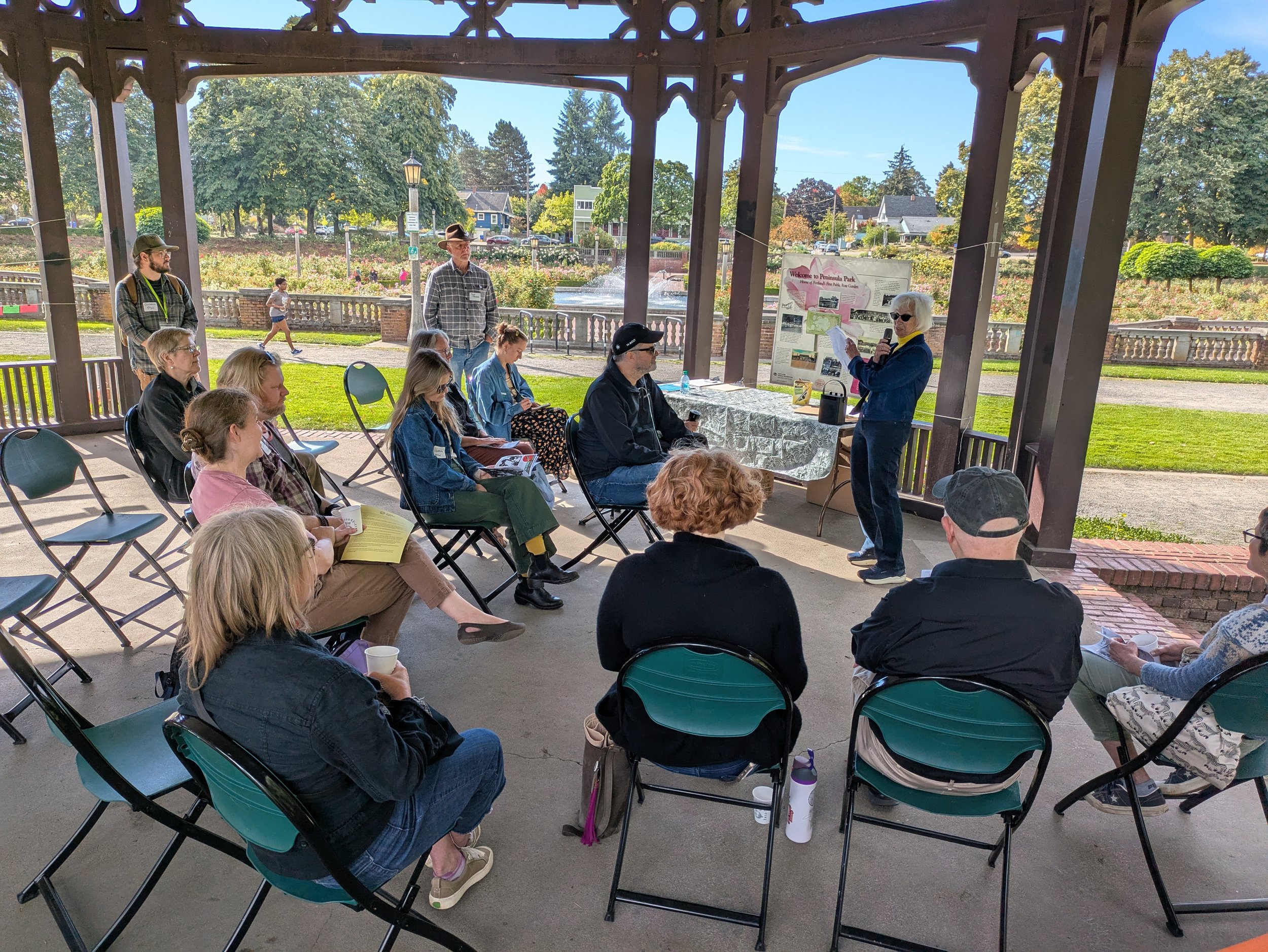
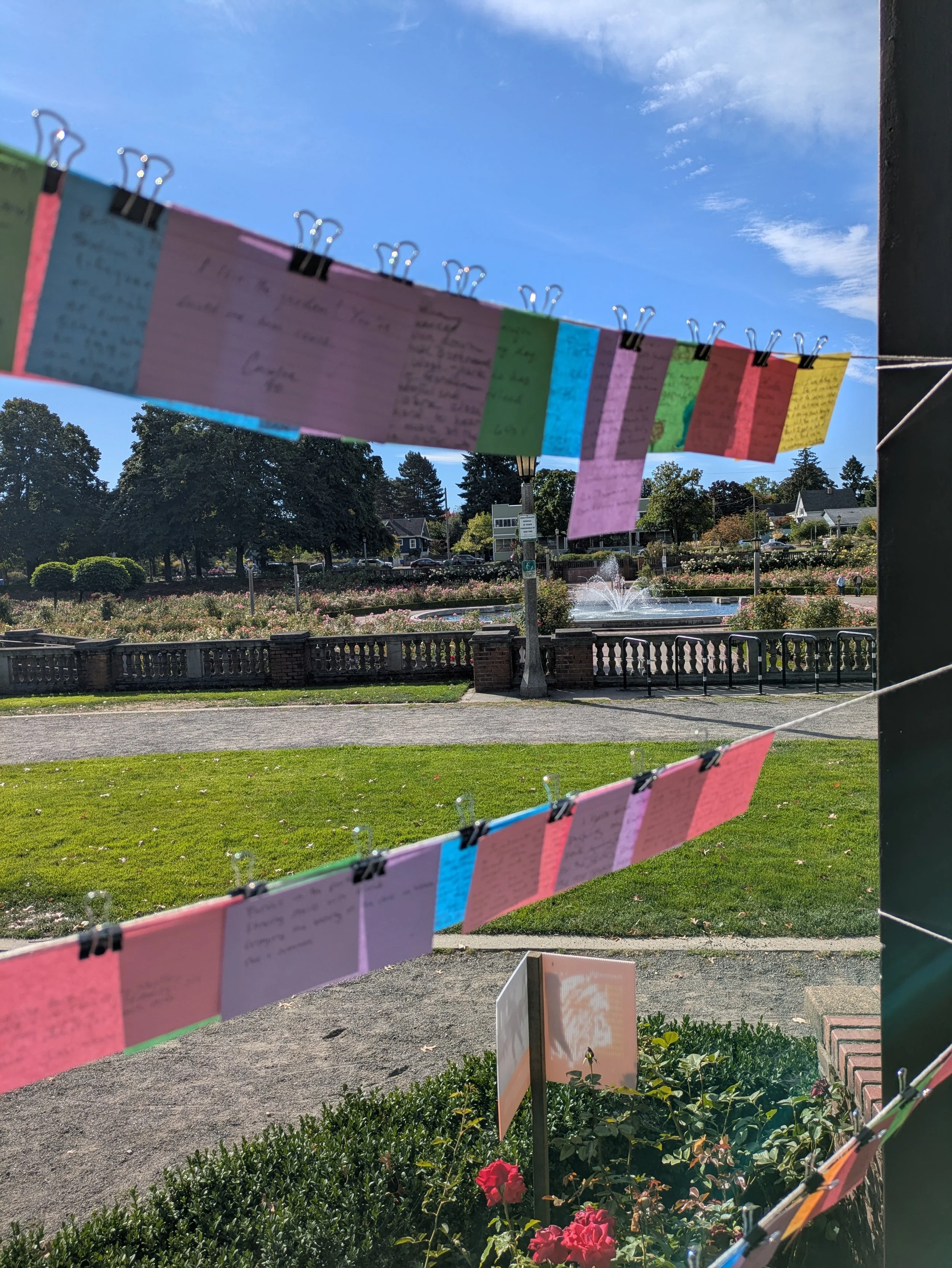
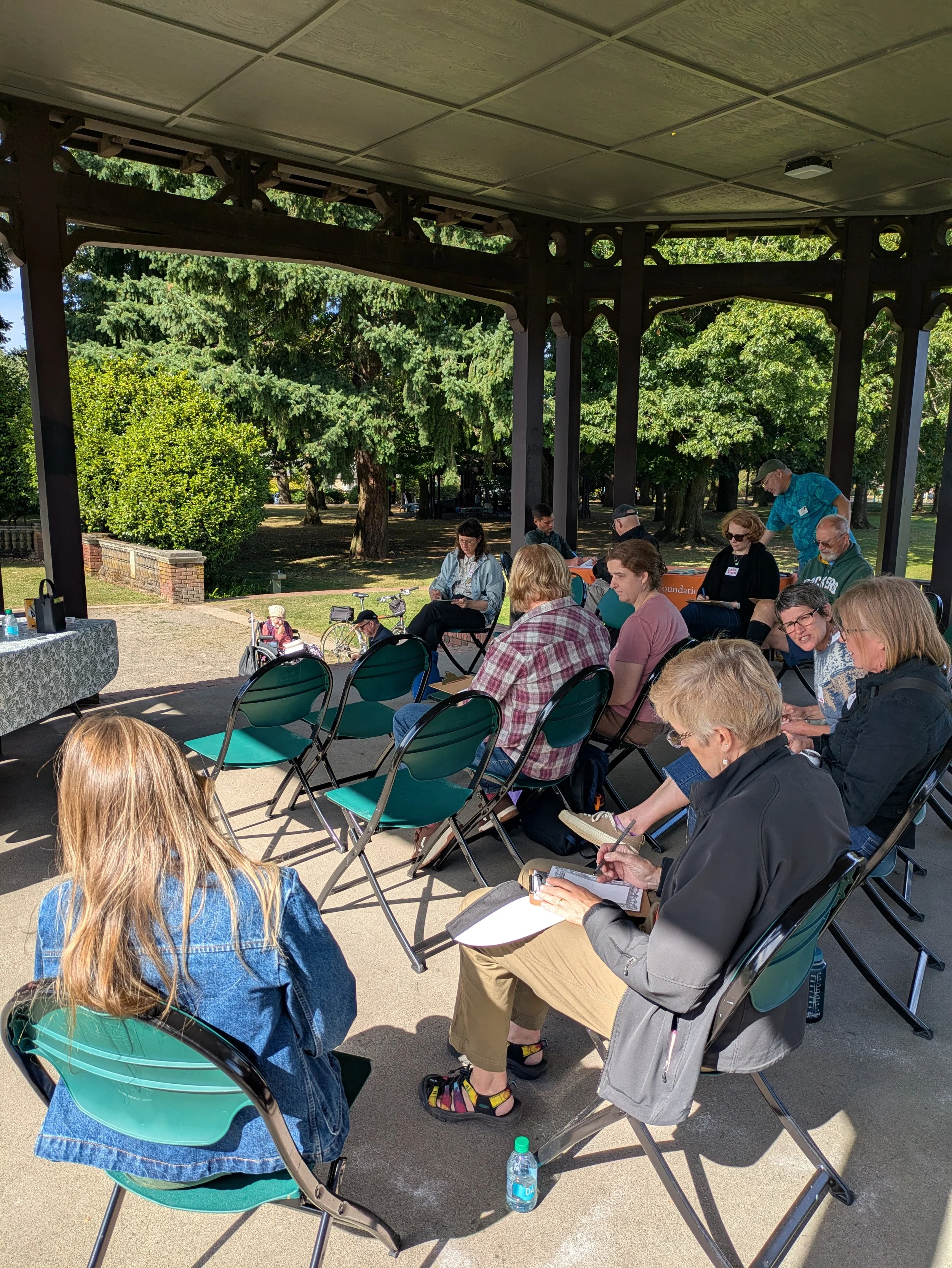
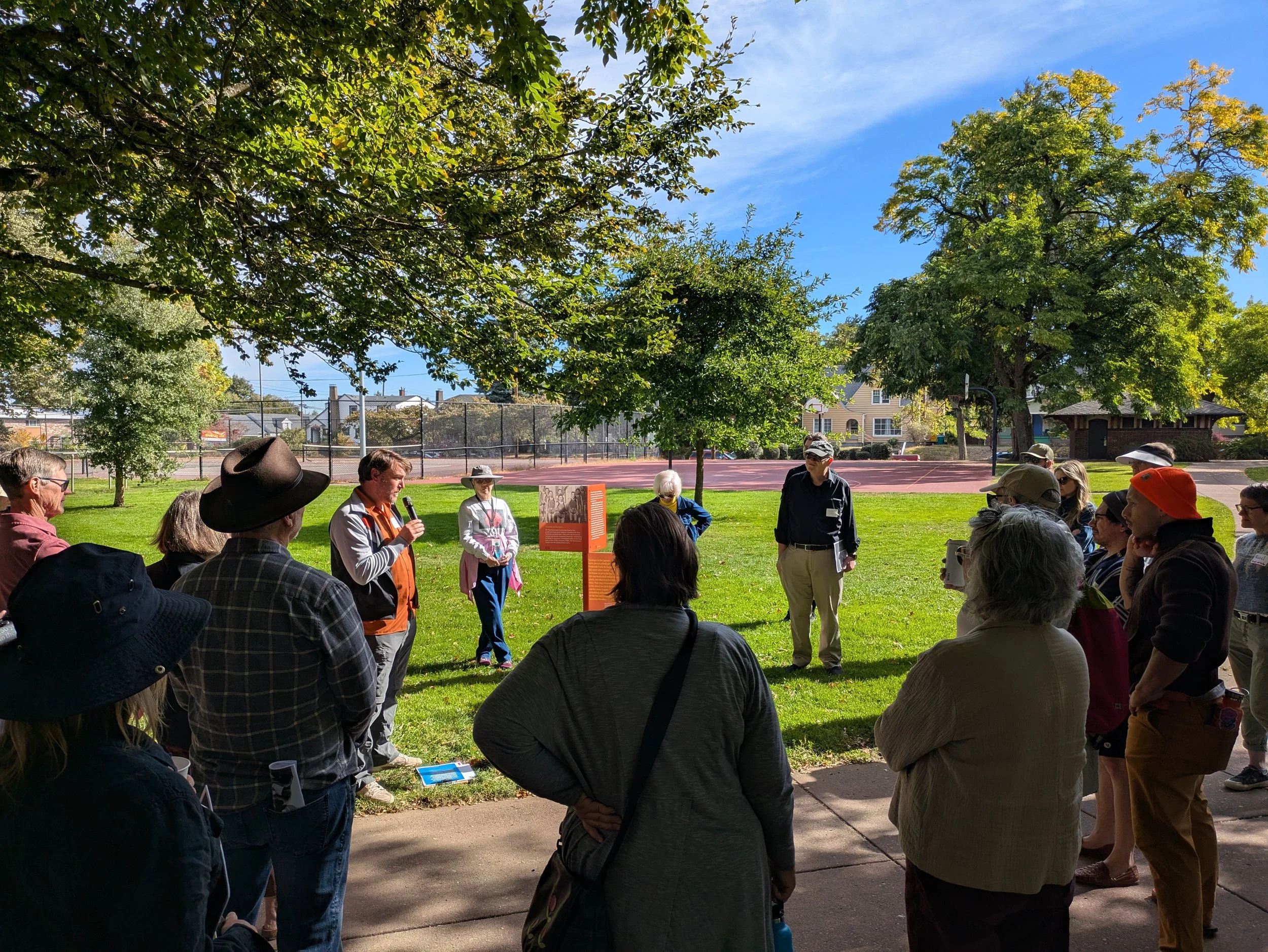
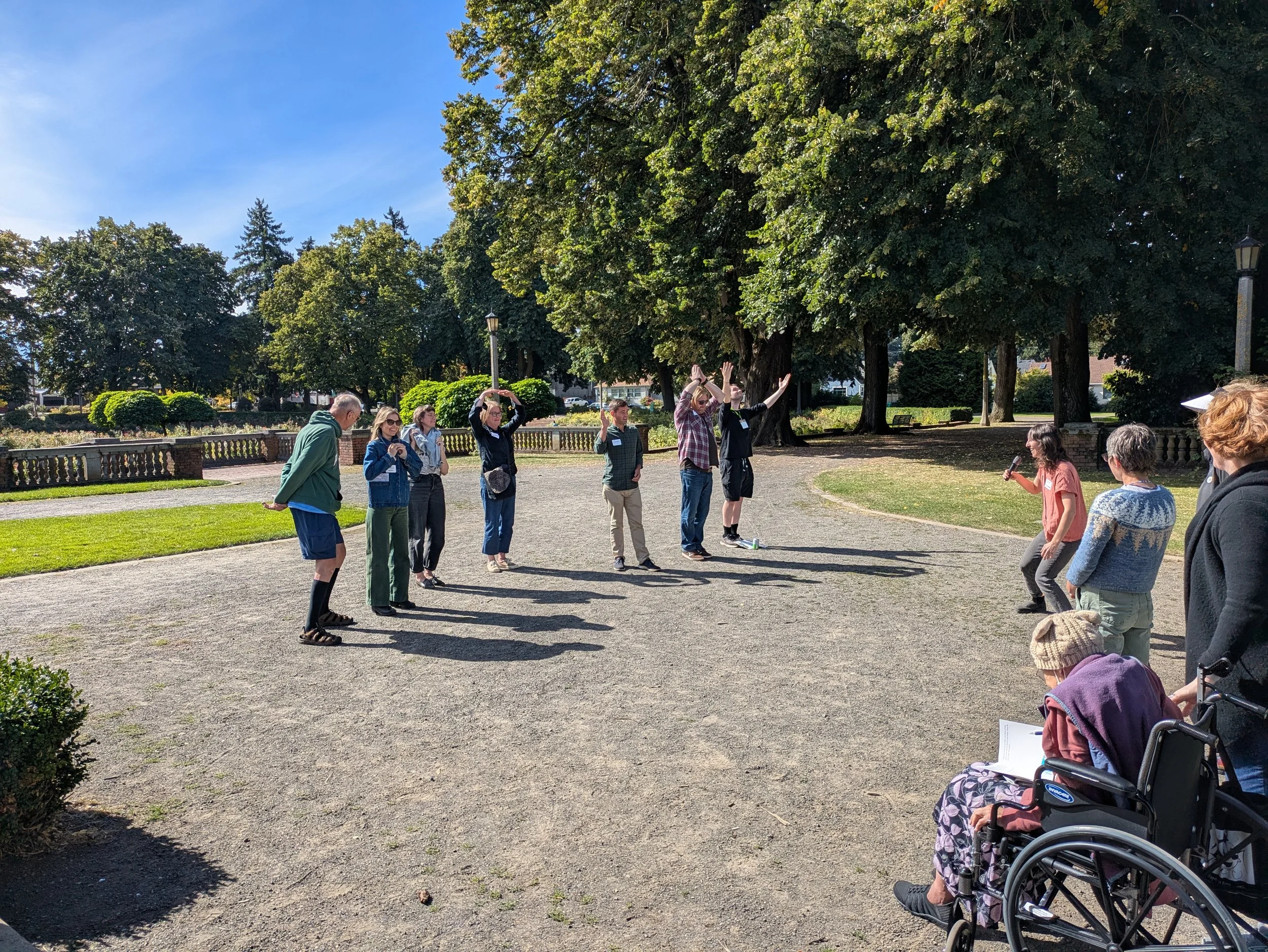
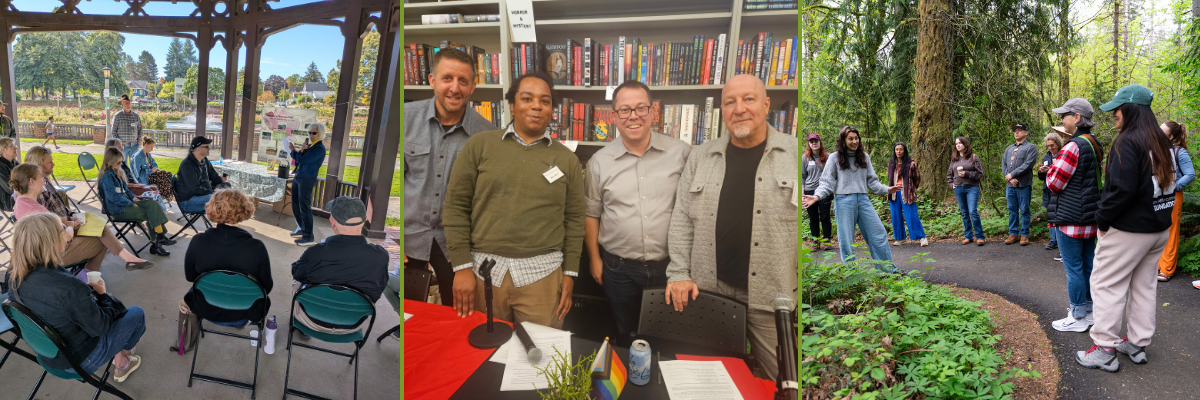
Above: Images from the field day, including a history lesson from Friends, shared interviews, and making living monuments.
Our first event took place in Peninsula Park. Your first thought might be: what memorial is there? Well, beyond the historic (and first!) rose garden in Portland, the Friends of Peninsula Park Rose Garden stirred up good trouble in the past few years implementing their Storied Ground project. This community-driven public history project has installed low-cost, temporary, but professionally-designed signage featuring decades of local history which spans diverse communities and uses of the park - from a circus to historically-timed basketball practice. Dozens of these colorful, informational signs are freckled throughout the park, creating portals across time: introducing you to some neighbors long passed, some still bringing life to this vibrant park. We heard from Patricia Frobes, president of FOPPRG on the history of the project as a way to get a deeper understanding of the park’s history. David Hedberd, a local environmental historian, took us through the parkwide installation and shared the power of collecting local stories as a more grounded approach to writing, observing, and creating our “history.” Julie Hammond, a local artist involved with the project led us through an embodied interview process inquiring the participants about memorable experiences in a park. This project stands as a fantastic example of how thoughtful, creative, and small-budget interventions can invite a complex reframing of our public spaces, better understood through a polyphony of stories. Plus, this project and more was covered in Literary Art’s recent podcast series. Have a listen here.
Panel: Through the Eyes of the Elk:
Social, Structural, Ecological Histories
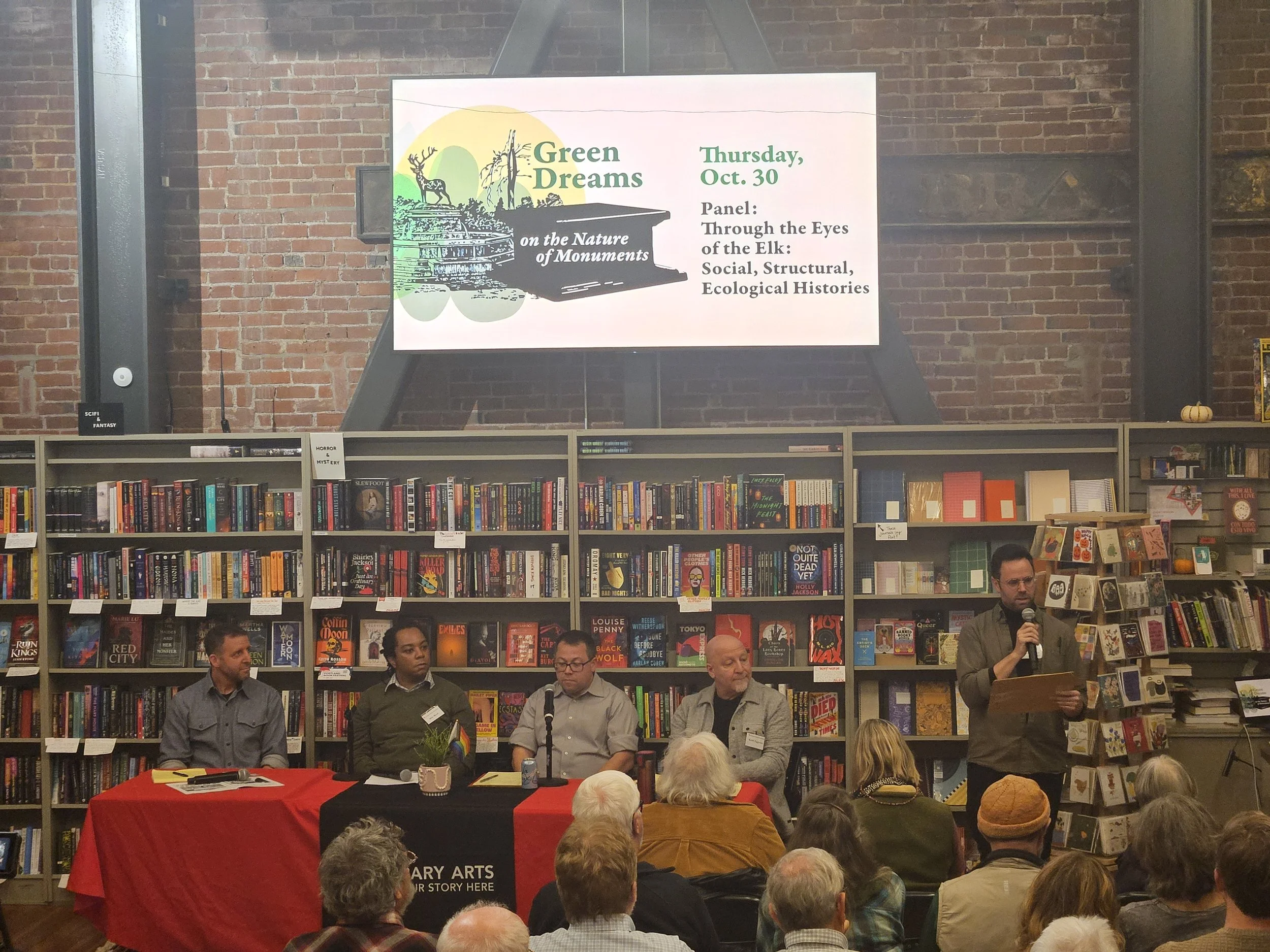
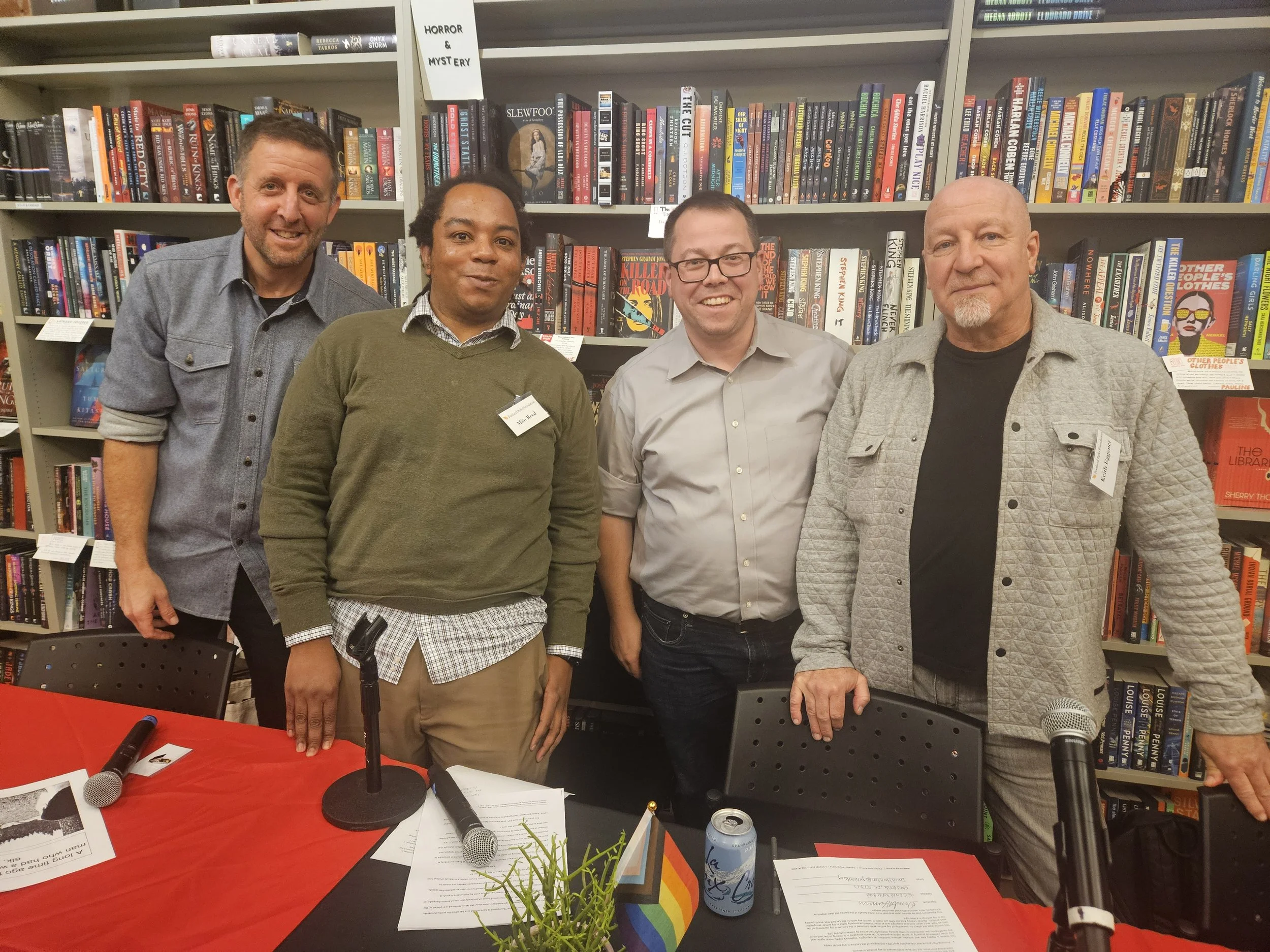
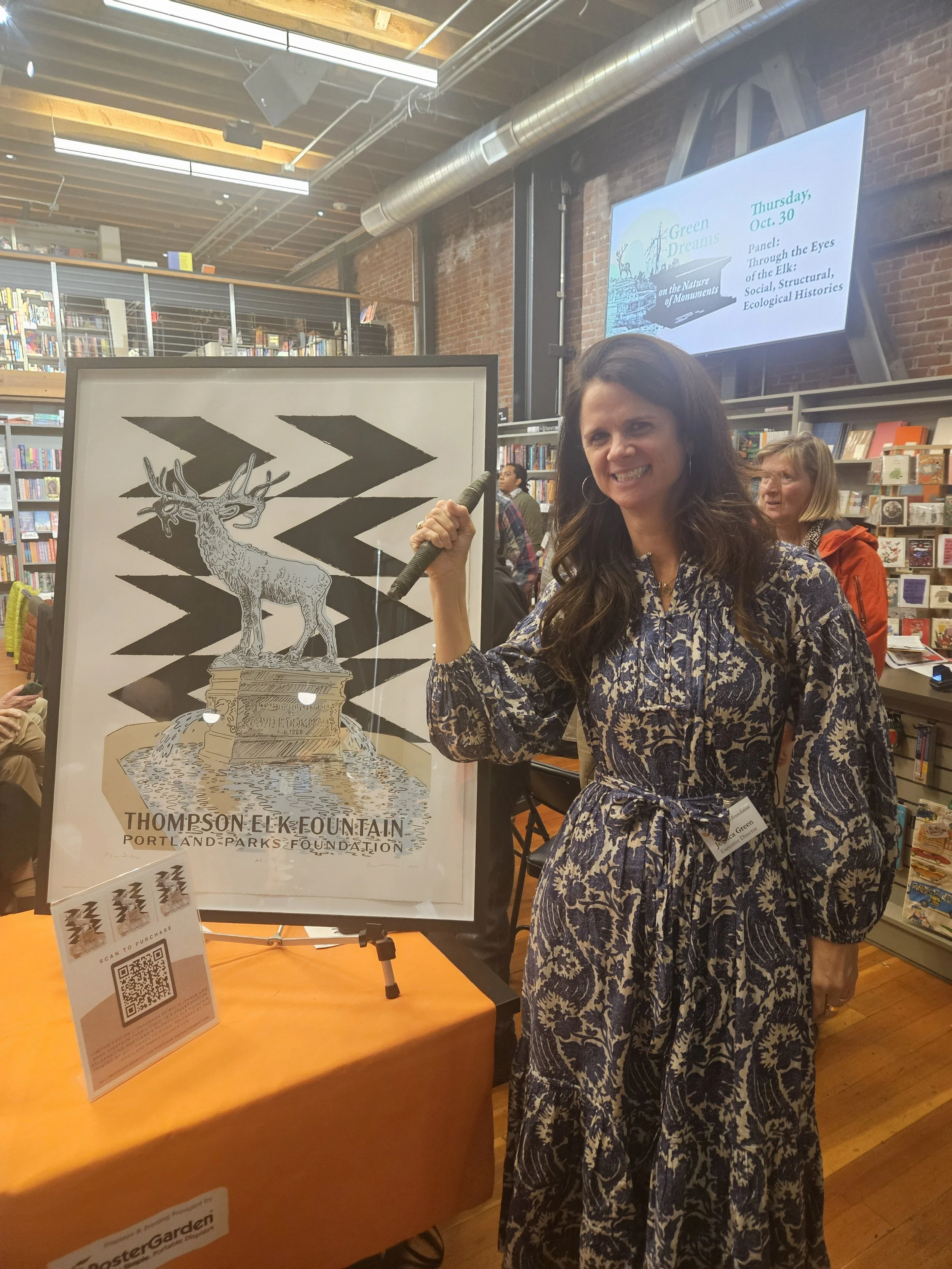
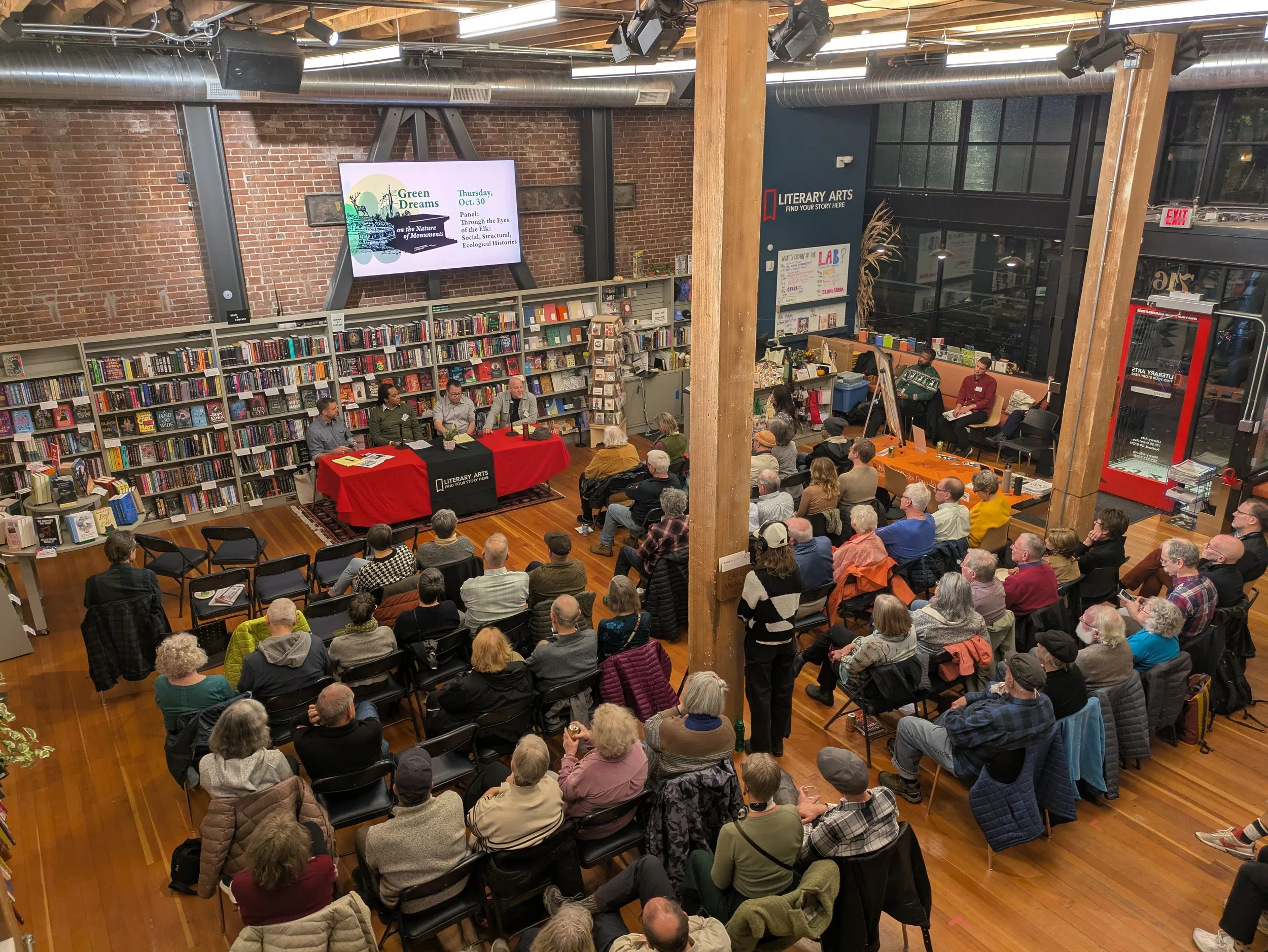
Above: Image from the evening panel including our four speakers, PPF’s Executive Director, Jessica Green holding the old bolt which was the Elk’s original sole anchor point, and shots of the crowd.
Our second event focused on the dynamic histories of our beloved Thompson Elk Fountain, ever a gathering place for conversations about how our city is run. We gathered for an evening at the lovely Literary Arts building to learn from three local historians: Milo Reed, an independent historian who wrote the social history of the Elk for the restoration feasibility study; Keith Eggener, architecture professor at University of Oregon who spoke on Thompson’s personal history and role of the fountain; and David Harrelson, Cultural Resource Manager at the Confederated Tribes of the Grand Ronde, who spoke the broader cultural and ecological stories of elk and its role in early regional ecologies. Our panelists helped show us and attendees that the fountain has truly been a social and cultural watering hole for over a century, informing and empowering civic involvement and reformation. That community love continued at the Elk’s celebrated return this April, where hundreds gathered in a festive outpouring of music, dance, poetry and civic pride. We’re so glad the Elk is back! You can view the panel discussion online here.
Field Day at Tryon Creek:
Placekeeping in Motion: Native Memory and Presence
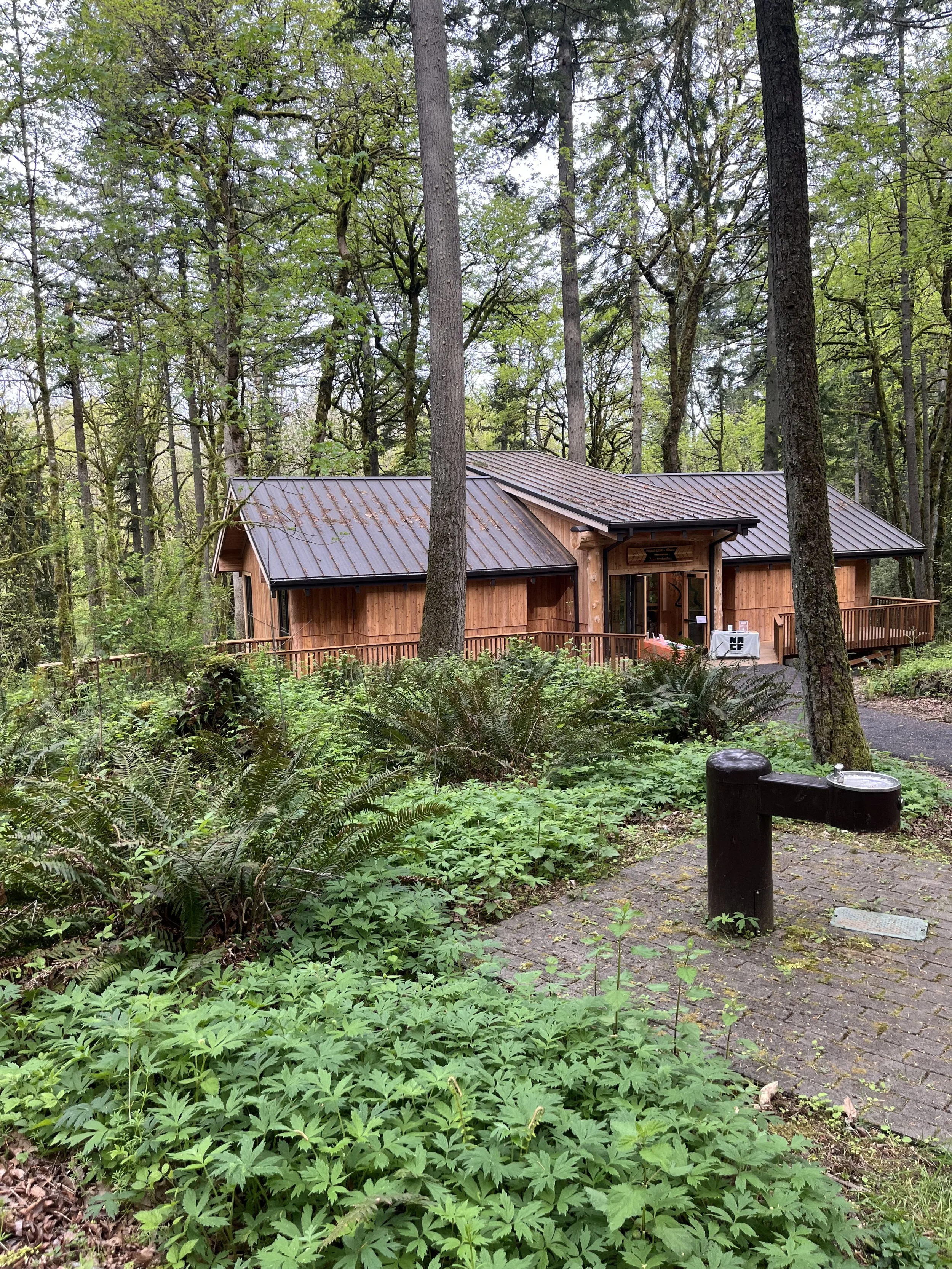
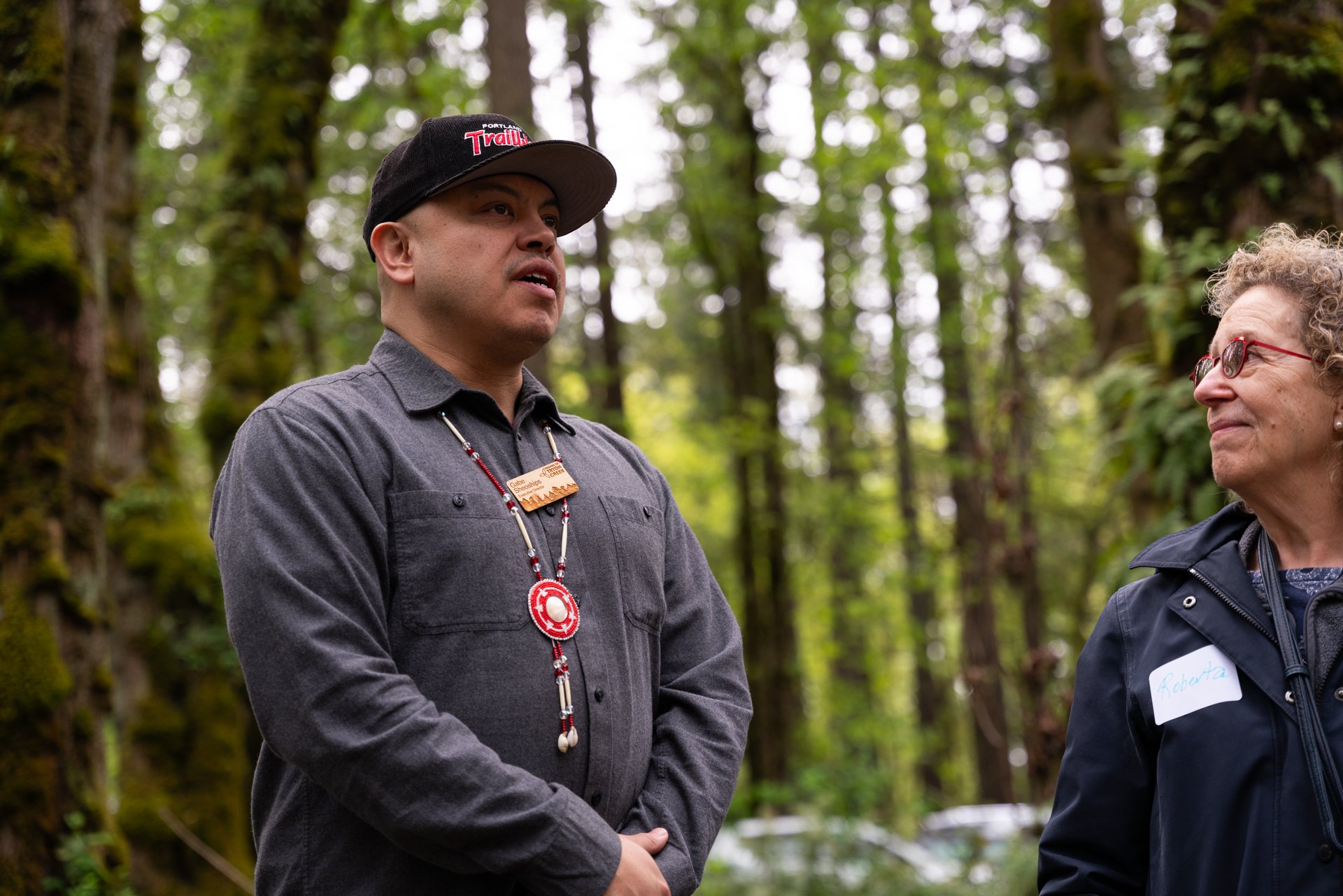
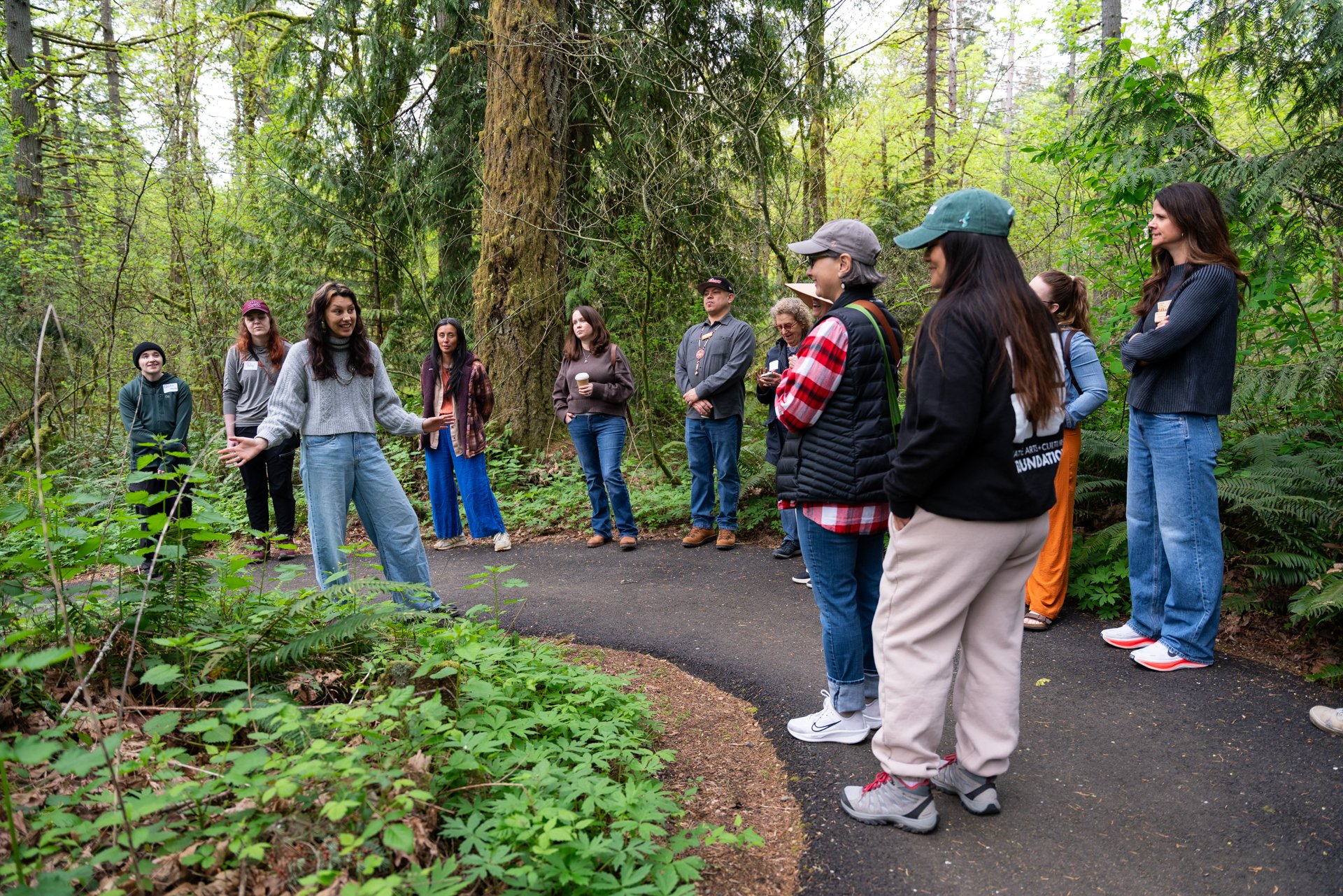
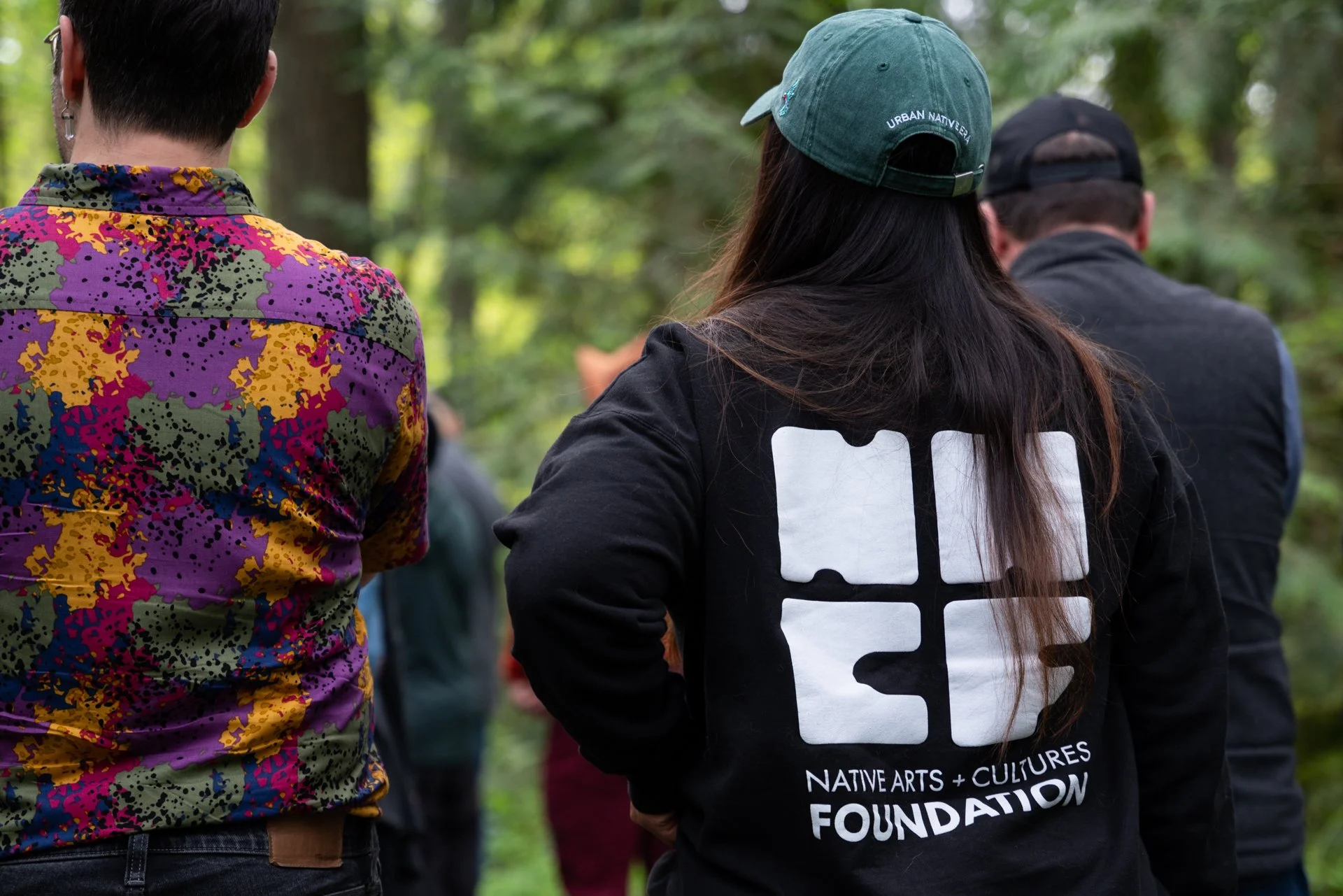
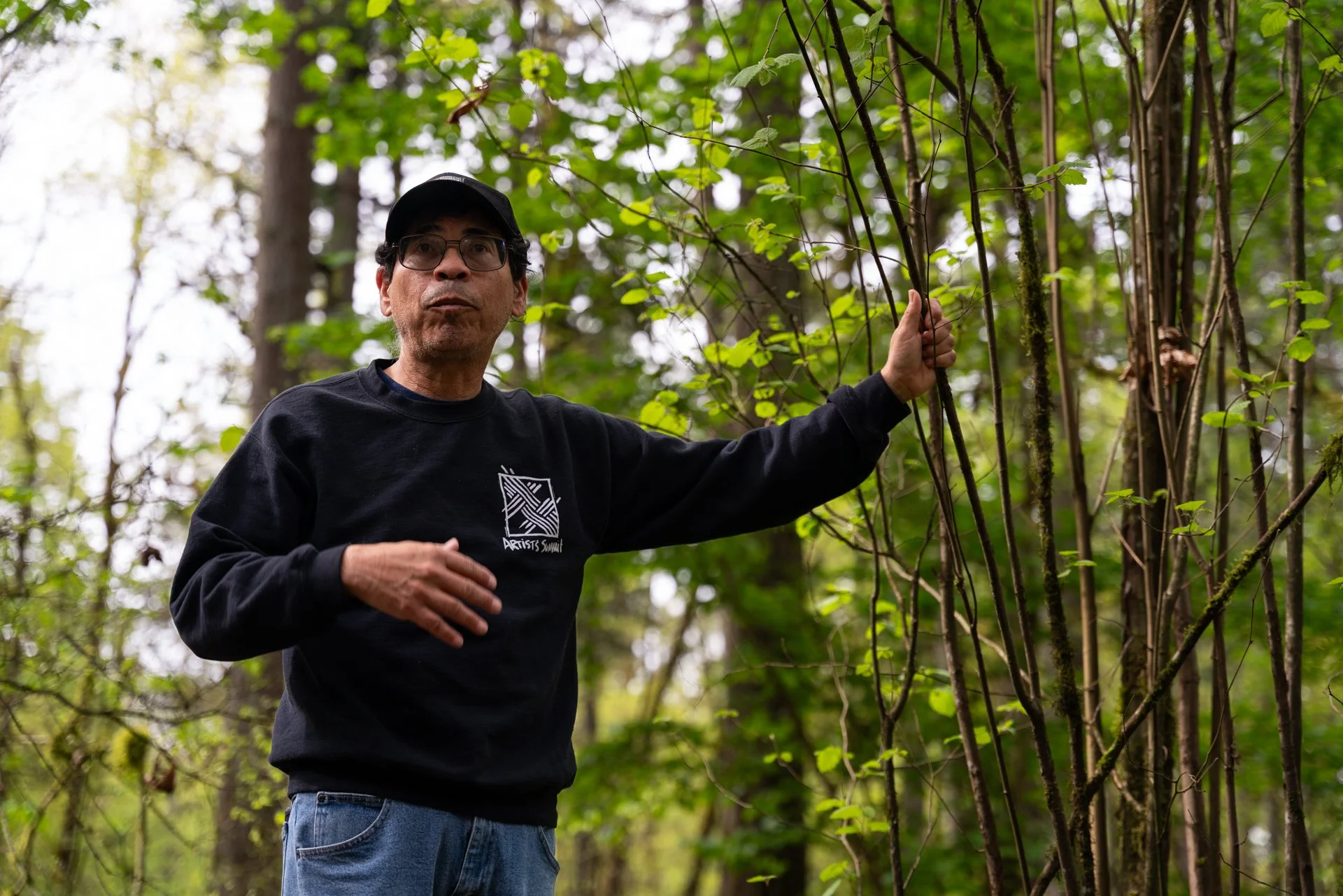
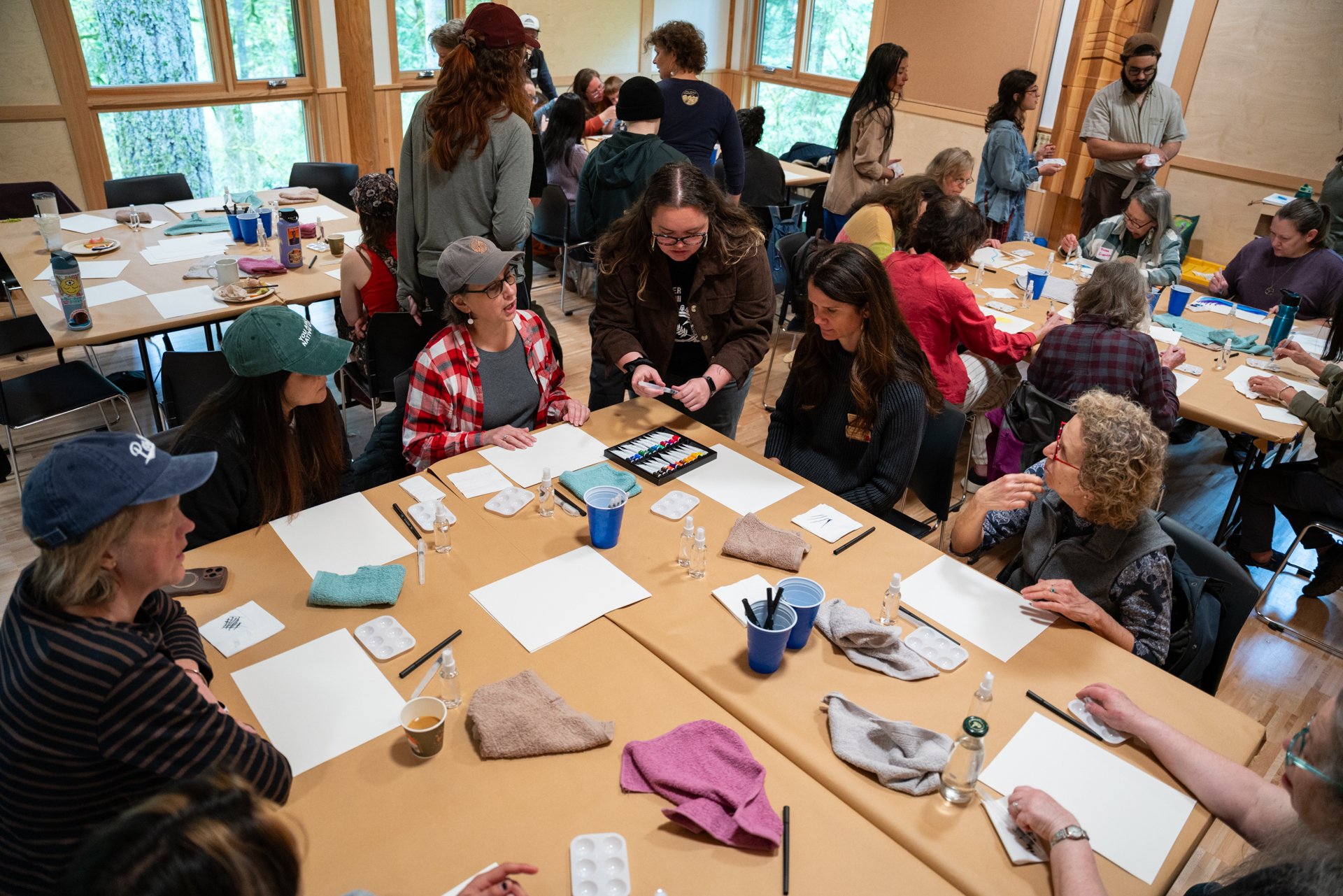
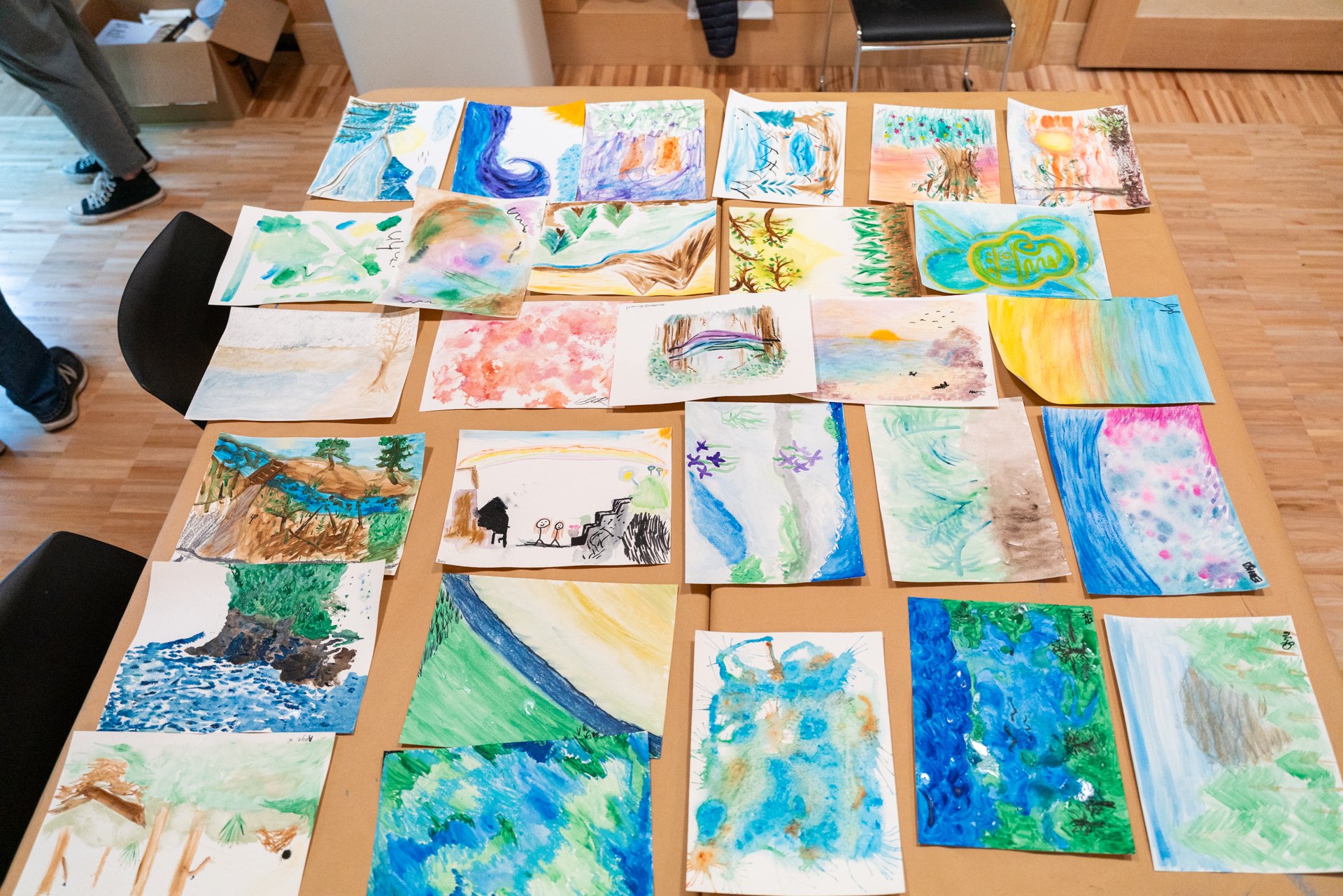
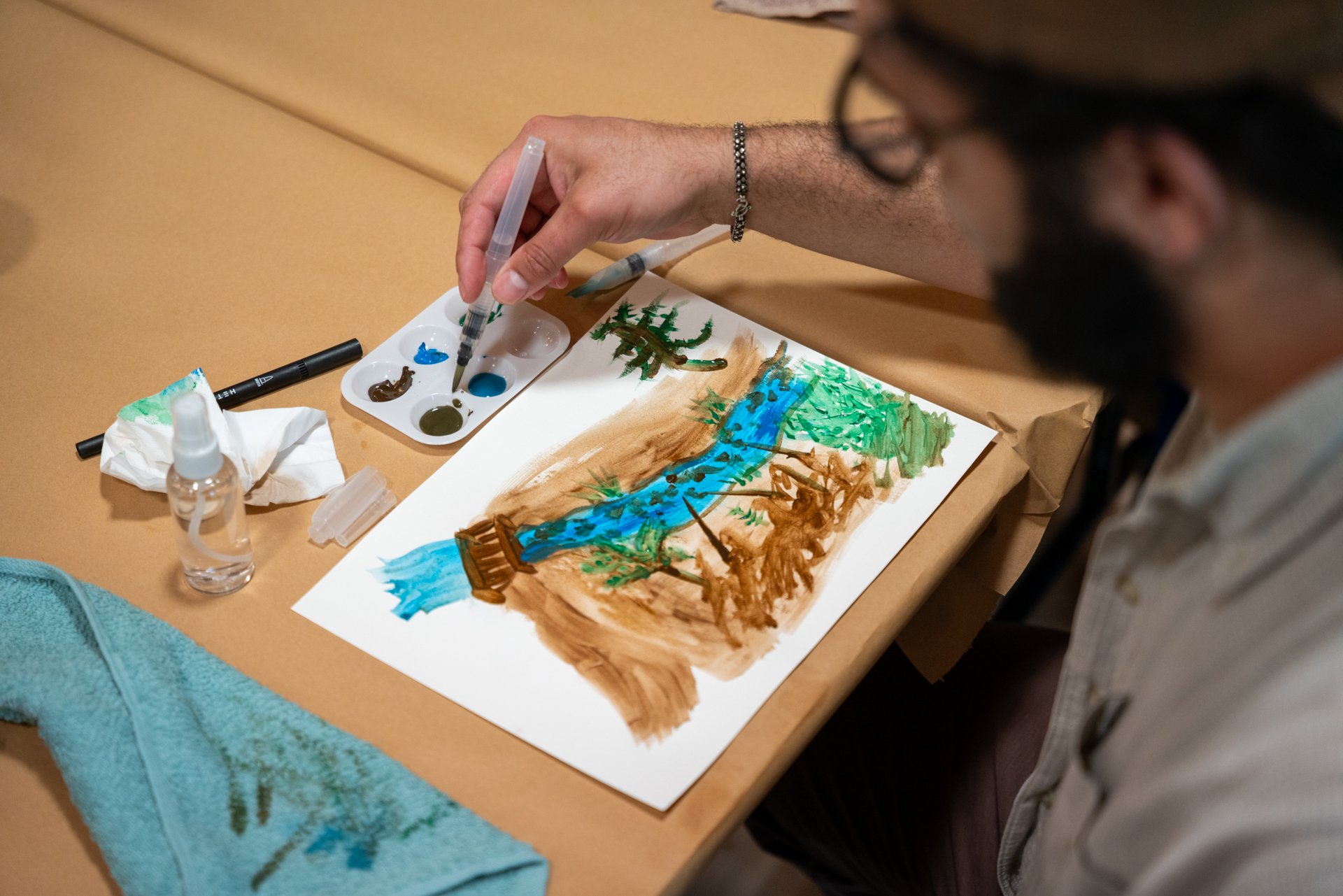
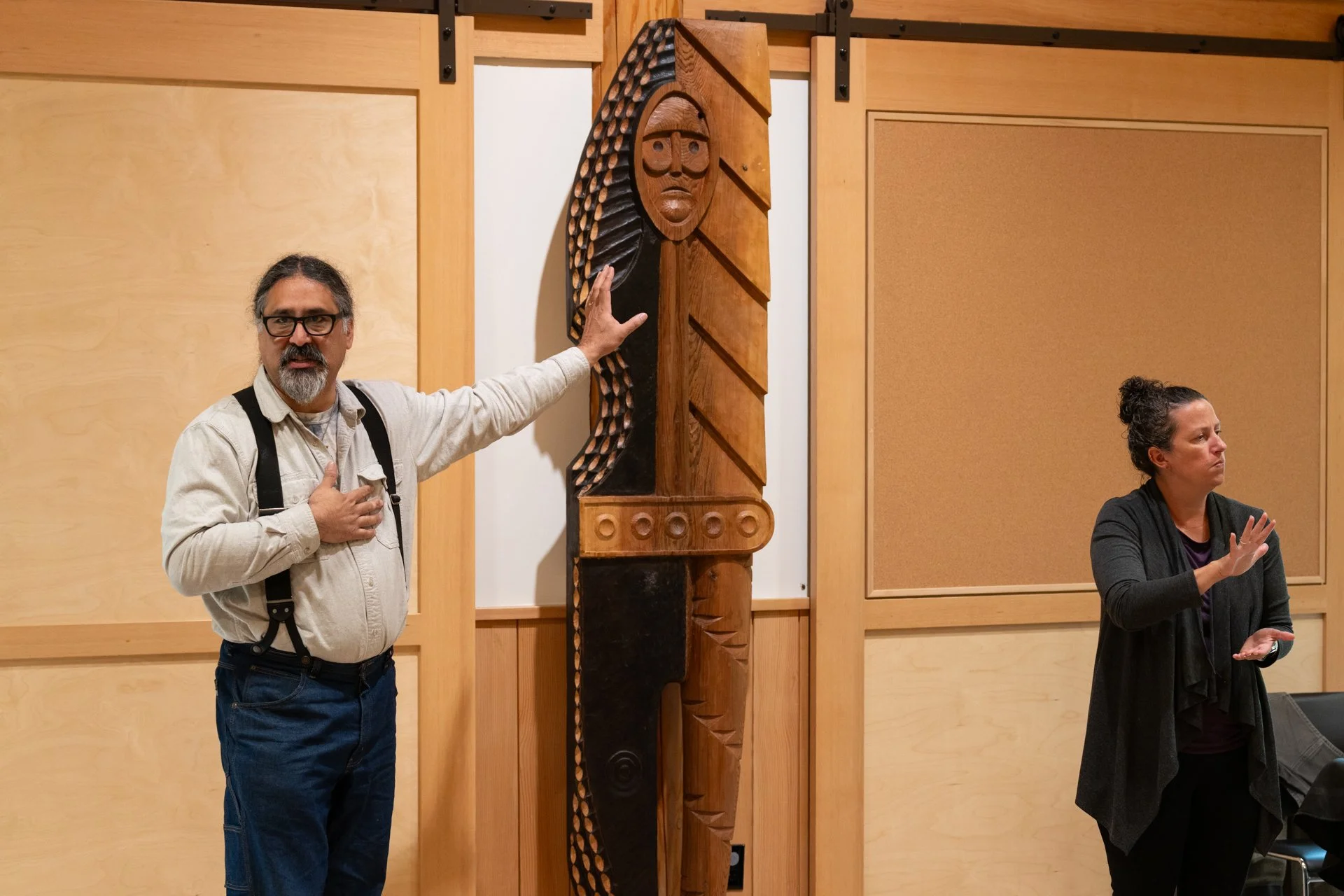
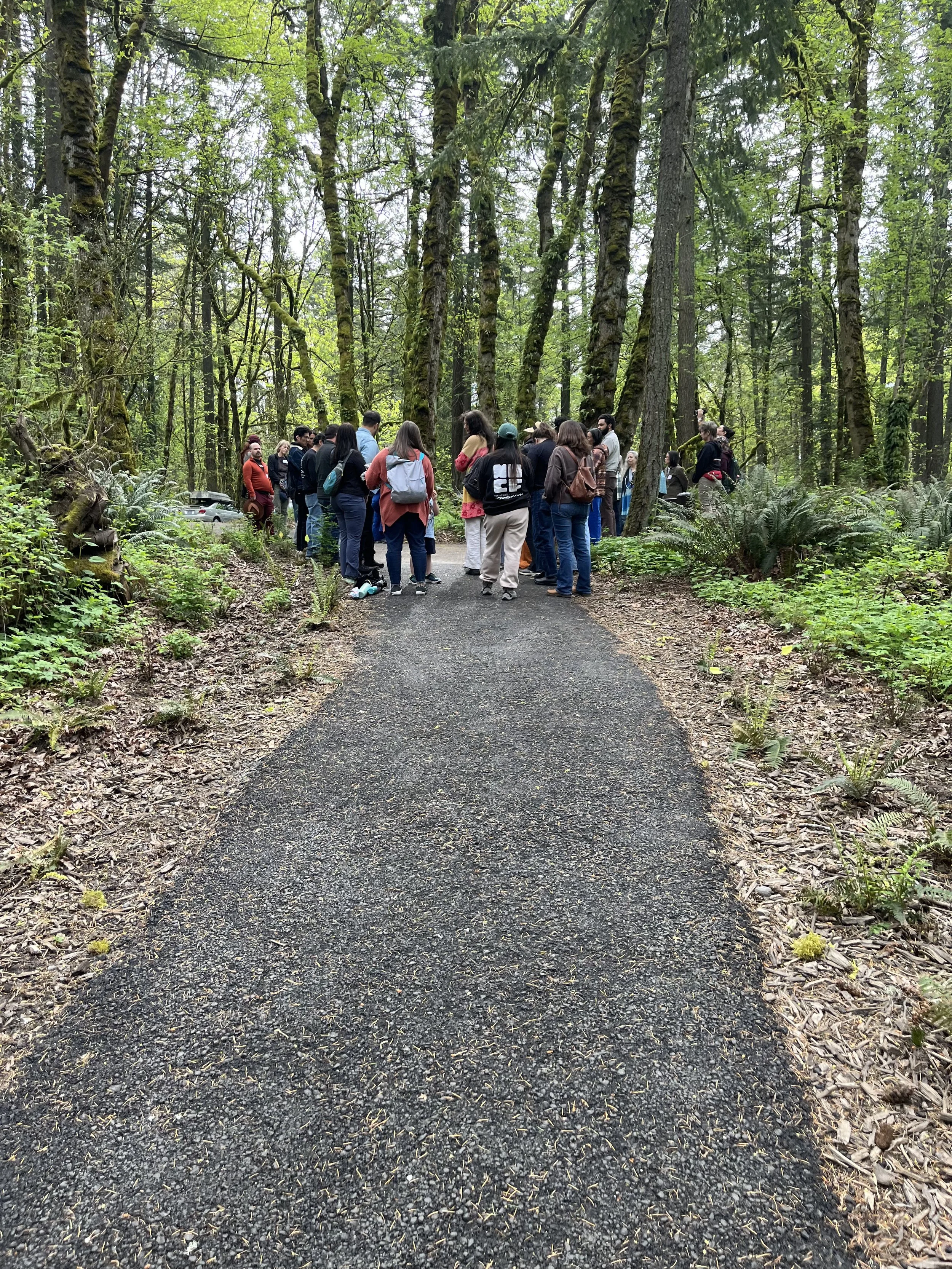
Above: Images from our field day, including an ecology walk, collective making and sharing, and panel talk from artists.
The third and final event took place at Tryon Creek State Natural Area, where we partnered with the Friends of Tryon Creek and the Native Arts and Cultures Foundation to focus on Pacific Northwest indigenous perspectives on relating to the land, place-based memory and traditional art as storytelling. We spent the first part of our day in the forest, getting acquainted with the look and uses of native flora like stinging nettle and cedar. Then, attendees gathered at Tryon Creek’s new education pavilion (inspired by indigenous architecture) and reflected on their own relationship with the forest through a reflective painting exercise led by painter Kitana Connelly (Grand Ronde). We closed out the day with a shared meal of indigenous cuisine and a discussion with sculptors Shirod Younker (Coquille) and Greg A. Robinson (Chinook), whose wooden sculptures create a cultural crossroads in the new pavilion, drawing from traditional forms and ways. Participants left the day with a sense that these rich cultural and ecological contexts are not an optional add-on, but a necessary inclusion to understand our collective placemaking.
Stay tuned for future series exploring what green spaces were, are, and can be for Portland!