Value of Parks

Fund our Parks: A Message from PPF's Executive Director

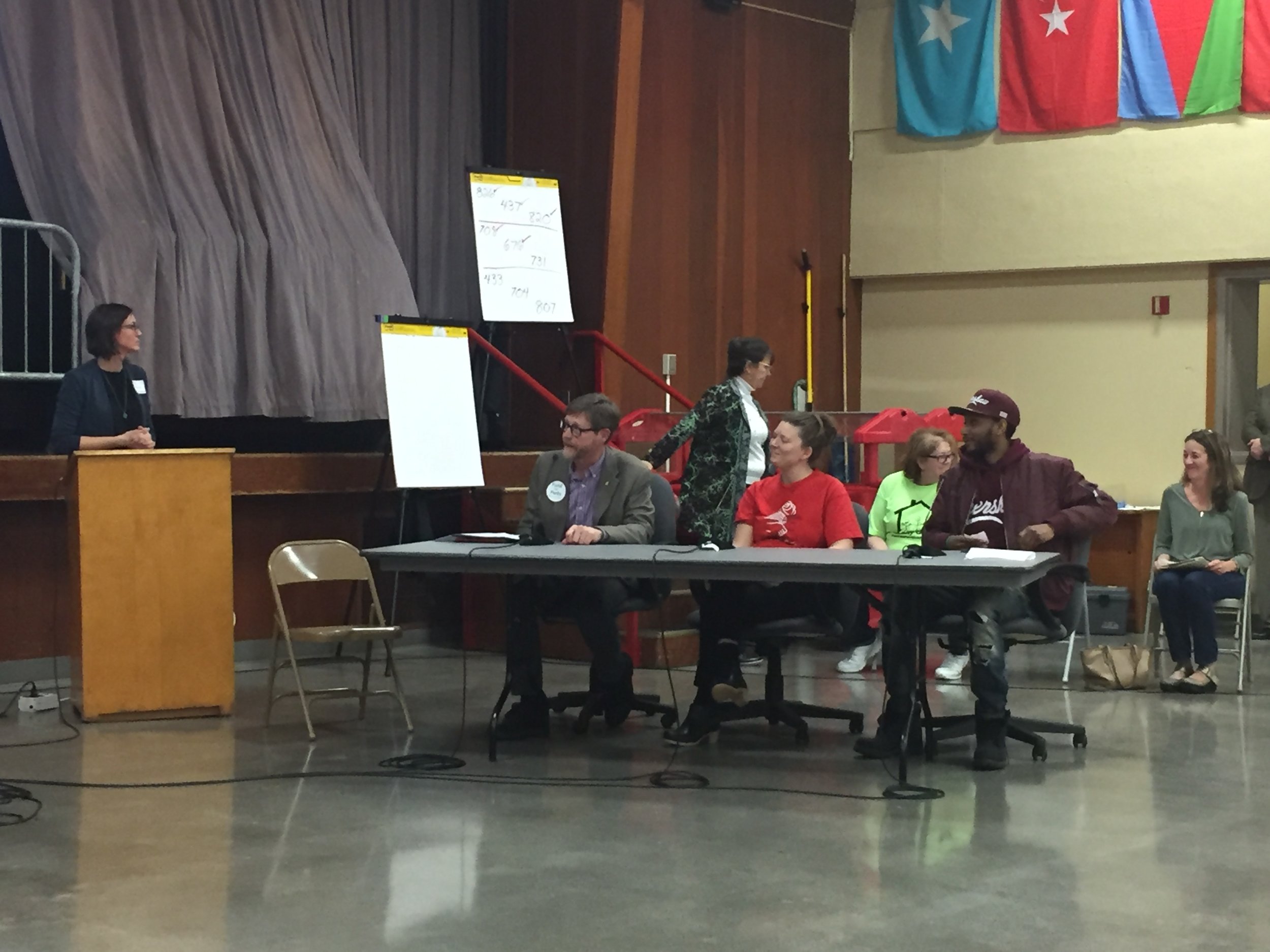
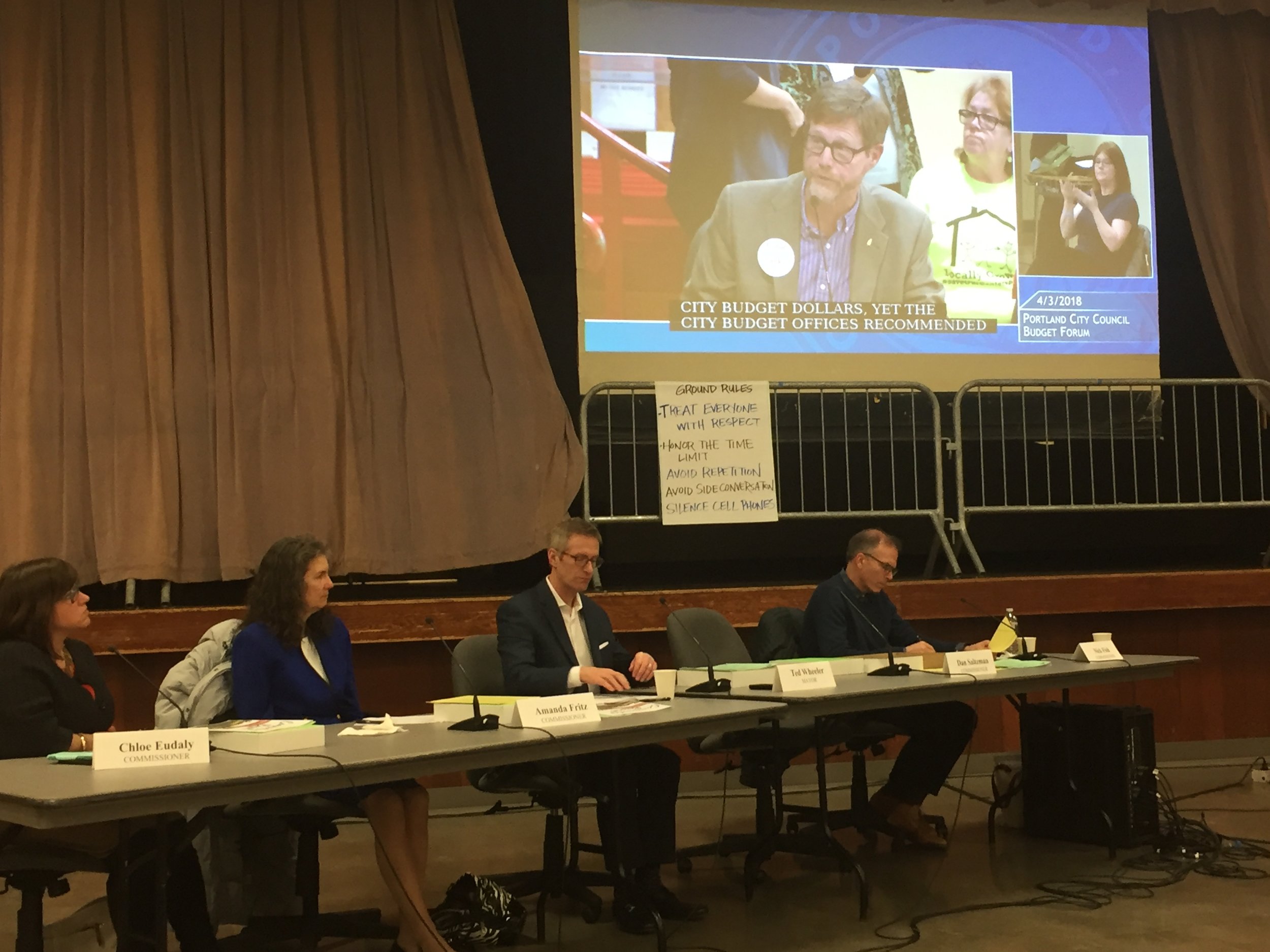
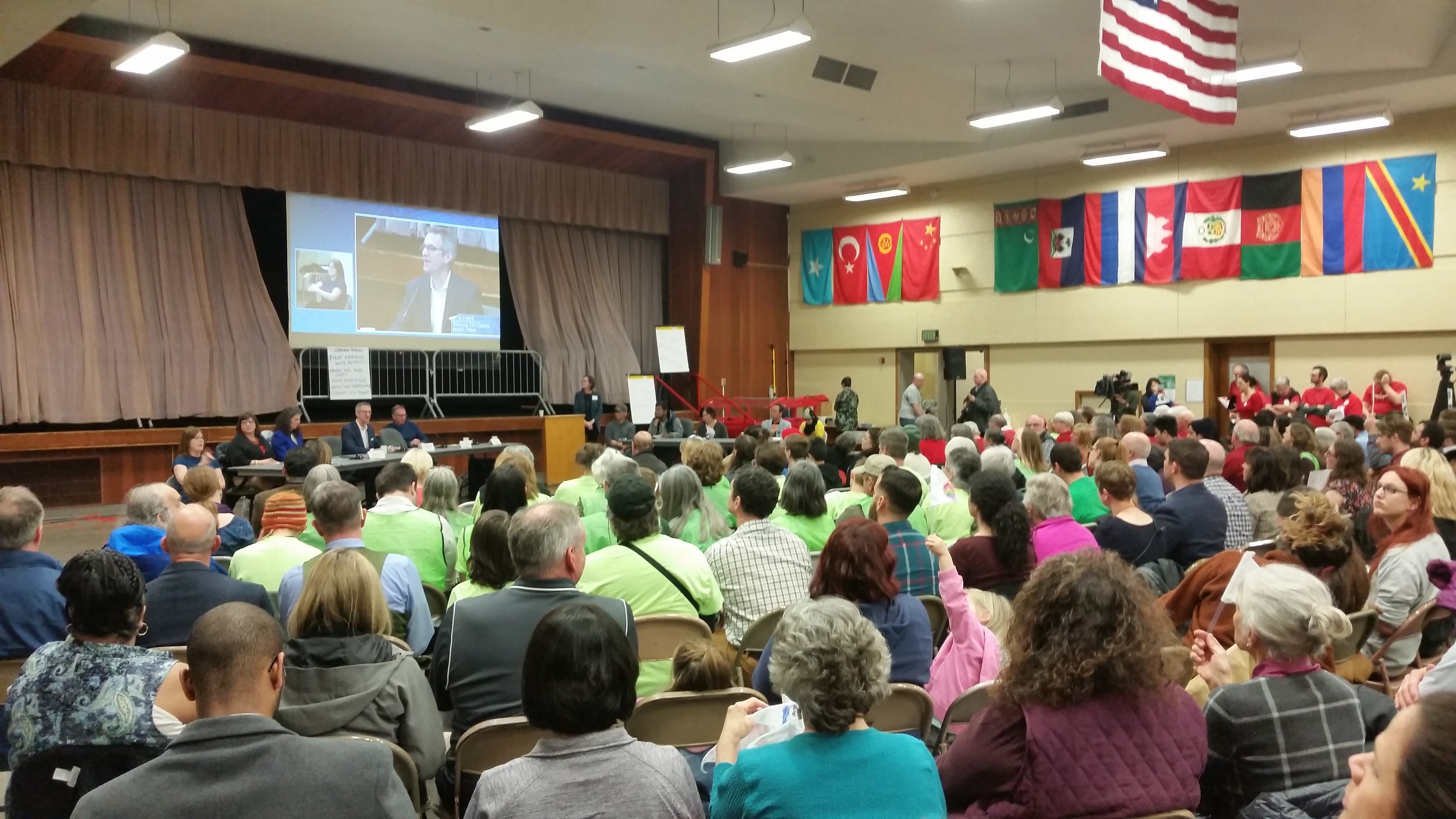
Thank you to everyone who came out to support Portland's parks at the Community Budget Forums on April 3rd and April 17th along with those who submitted written testimony.  On April 3rd PPF's Executive Director, Jeff Anderson, had the opportunity to testify on behalf of the Foundation. Below is the text of the testimony he read from. You can also access the video version of the testimony here (Jeff's testimony begins at 1hr47min).

Community Budget Forum - April 3, 2018
Statement to City Council
Jeff Anderson, Executive Director

Good evening, Mayor Wheeler and members of the Council.  Thank you for the opportunity to speak about the proposed 2018-19 city budget.

My name is Jeff Anderson.  I’m Executive Director of the Portland Parks Foundation.  The mission of the Portland Parks Foundation is to mobilize financial and popular support to ensure a thriving and accessible parks system for a healthy Portland.  The Foundation was created by the city in 2001 as Portland’s chief private fundraising partner for parks.

The Portland Parks Foundation is extremely concerned about the ongoing general fund cuts for PP&R in the proposed 2018-19 budget. 

Public parks are very likely our most popular city service.  86% of Portlanders rate their parks as good or excellent.  More than 9 out of 10 residents use our parks.  Parks advance community wealth, community health, and community culture.  They are not an expendable amenity.  They are as essential as any other service supported by city budget dollars.  Yet the City Budget Office’s proposed cuts to parks are disproportionately high.  In fact, it appears that 40% of ALL the recommended ongoing cuts target our parks.   

Parks are integral to our core character as a city.  Parks host major music festivals, diverse cultural events and holiday celebrations, and a variety of events promoting local businesses.  A recent study estimates the economic impact of local parks in Oregon at $1.9 billion dollars and over 17,000 jobs.  Portland’s a big slice of that pie.

Portlanders routinely give some 470,000 hours per year to volunteering in the parks—an annual value of $5.5 million or more.  The City of Portland’s budget should signal appreciation for that contribution and should reinforce—not undermine—the efforts of volunteers.  In fact, the city should be looking for every additional opportunity to leverage the good will and private resources that have already contributed so much to iconic parks all over Portland.  

We already have a backlog of $430 million in deferred major maintenance for parks.  The proposed budget cuts accelerate a downward spiral that the City Council has started with its cuts to general fund support for parks over the past decade.  Other cities have found to their sorrow that massive disinvestment in parks is nearly impossible to make right.  It’s also a huge deterrent to success in the Parks Foundation’s own work to encourage private contributions to our public parks.

This year the city is projected to have record tax revenues.  This is not the time to put parks’ ongoing general fund support on the chopping block.  As PP&R’s Budget Advisory Committee letter to you observes, “After multiple years of reductions, the cuts now dig deep into core PP&R services and values, have significant service-level impacts for the public, and further erode employee morale.”  

In closing, I urge you to support the public parks the way Portland’s public wants you to.  Invest in what makes Portland not only livable, but exceptional.  The Portland Parks Foundation stands ready to help.  Thank you for your attention.
Enjoying the Parks in the Rain - The Value of Community Centers

By Julia Benford

Here at the Portland Parks Foundation, we love to see people enjoying their neighborhood parks as often as possible. But we also understand that in the winter, Portland’s rainy, wet weather can make outdoor activities seem a bit less than ideal. One great way to avoid the rain while still taking advantage of Portland’s parks: visit your local community center! PP&R’s community centers offer tons of different amenities, from fitness classes to swimming to kids’ activities. Here, we break down what makes some of Portland’s community centers awesome.

Gymnastics at Montavilla Community Center. Photo courtesy of Portland Parks & Recreation.

Gymnastics at Montavilla Community Center. Photo courtesy of Portland Parks & Recreation.

Montavilla Community Center: 8219 NE Glisan Street
If you’re a teen (or have one in your household), Montavilla Community Center is the place to go. The center offers unique and interesting classes specifically for tweens and teenagers, including spoken word poetry, weightlifting, and gymnastics. If your teen has a busy schedule or just wants more flexibility, there are also drop-in classes (breakdancing, anyone?), movie nights, and homework help. Best of all, every class for teens is FREE thanks to Portland Parks & Recreation’s TeenForce program, which helps teens get involved with their local parks.

Matt Dishman Community Center: 77 NE Knott Street
The Matt Dishman Community Center truly offers something for everyone, from empowerment programs for young women to van trips for seniors—including a coffee and chocolate tasting tour that’s perfect for Valentine’s Day! The center also offers a wide variety of affordable, inclusive classes for people with disabilities or special needs, including dance classes, winter crafts, and button making. It’s the perfect place for all your loved ones to socialize.

Peninsula Park Community Center: 700 N Rosa Parks Way
Located in beautiful Peninsula Park, this North Portland community center has lots of fun activities for both kids and adults. Parents can enjoy adult/child dance, music, and gymnastics classes together with little ones. Or if your 4-6 year old loves the circus, they might enjoy the center’s circus arts class, where they can learn improvisation, clowning, and juggling! For adults, it’s never too late to learn a new skill—you can learn to play guitar, piano, ukulele, or violin with private music lessons.

Charles Jordan Community Center: 9009 N Foss Avenue
Are you an older adult looking to get more involved in your community? Charles Jordan Community Center has plenty of options just for you, with classes for ages 55 and up. From inclusive fitness options like Yoga in Chairs to floral design classes to van trips to the coast, there’s something for every interest. For the younger set, the center offers before and after school care and birthday party rentals—you can even rent a bouncy castle for extra fun!

Woodstock Community Center: 5905 SE 43rd Avenue
Woodstock Community Center offers some of the most unique classes of any community center in Portland. If you’re a senior interested in recording your family history, the center offers genealogy and memoir writing courses, which let you share your history with younger generations! For people of all ages who want to pick up a new skill, there are classes for calligraphy and antique clock repair. Finally, adults ages 60+ who want a relaxing fitness class can give hula dancing a try for a unique workout.

Swimming for all ages at the East Portland Community Center. Photo courtesy of PP&R.

Swimming for all ages at the East Portland Community Center. Photo courtesy of PP&R.

East Portland Community Center: 740 SE 106th Avenue
For fitness buffs and people looking to keep up their New Year’s resolutions, East Portland Community Center is ideal. They offer exercise classes for all ages and activity levels, as well as family fitness classes perfect for keeping the whole family healthy.  Take a break and enjoy swimming in the pool—swimming lessons and water fitness classes are also available! And finally, for those with homeschooled kids looking to socialize, the East Portland Community Center offers sports and art classes specifically for homeschoolers. It’s a great place to branch out and try something new.

Sellwood Community Center: 1436 SE Spokane Street
Feeling crafty? Sellwood Community Center might be the place for you. They’ve teamed up with the Portland Lace Society to offer low-cost lacemaking and crochet classes—try it out and you might discover a new hobby! Little ones can also discover their creative sides with baby and toddler art classes for children 10 months and up. If you have school-aged children, check out the Sellwood Community Center’s Grow after-school program, which helps children build gardening and cooking skills and find physical activities they enjoy.

Don't miss Daddy Daughter Night at the Southwest Community Center. Photo courtesy of PP&R.

Don't miss Daddy Daughter Night at the Southwest Community Center. Photo courtesy of PP&R.

Southwest Community Center: 6820 SW 45th Avenue
If you have a child who’s looking for a new hobby and some new friends, the Southwest Community Center is a great place to go! They offer some amazing classes that will build lifelong skills, including cooking, rock climbing and skateboarding classes. Adults can find unique ways to get active too—take advantage of the community center’s rock wall, or try out a barre class. Finally, if you’re the father of a daughter, consider taking her to the center’s Daddy Daughter Night on February 24th or 25th! The $20 cost includes pizza, salad, frozen yogurt, and plenty of fun bonding time.

Master Naturalists in Portland

By Julia Benford

Have you ever walked through a park and found yourself wanting to know more about a particular tree, flower, or bird you saw there? Even in the depths of Winter Portland's parks hide natural treasures just waiting to be discovered. 

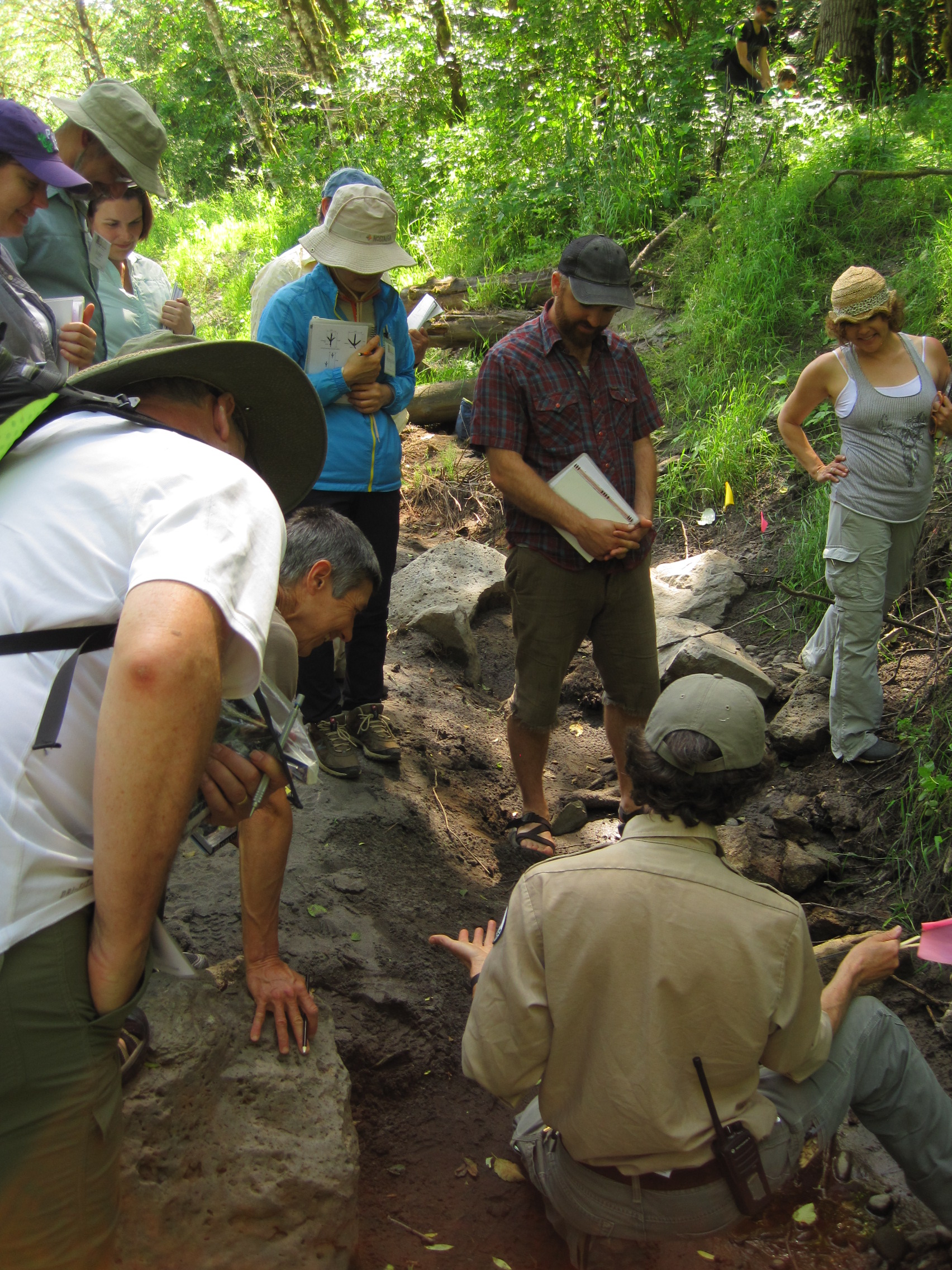
One great way to learn more about the native species of the Pacific Northwest is to take a Master Naturalist course, offered through Oregon State University’s Extension Service. We spoke to Brandy Saffell, Portland Chapter Coordinator of the Oregon Master Naturalist Program, to find out more about the role of Portland parks for wildlife conservation.

How have Portland’s parks played a role in your life?

The Master Naturalist training that I lead focuses on the Willamette Valley eco-region, which means that we do field work in Portland. We conduct two field classes in Portland parks, one at the Hoyt Arboretum and one at Mount Tabor. I find that hosting  classes in the parks is a great way to educate people about plant and animal life within the city. On a personal level, I really enjoy spending time in Portland’s parks because they create the feeling  of being out in the middle of a forest, but with all the amenities of a traditional park. That sense of being in the wilderness is something that’s unique to Portland parks.

What benefits have you seen from holding naturalist classes in city parks?

I remember one Master Naturalist class trip to the Hoyt Arboretum where many of the students were already knowledgeable in one particular field-- some were birdwatchers, some had studied native plants, et cetera. As a group, it took us three hours to do a third of our planned trail walk because people kept stopping to point out plants and animals along the way! It was amazing to see the students so engaged with their surroundings and eager to teach others about the natural world. Seeing the existence of biodiversity in the city can help spark a passion for learning more about the plants and animals around us.

What value do parks hold for Portland residents?

In addition to the important habitat they provide, parks are valuable because they inspire excitement about the outdoors! Many urban dwellers don’t have access to rural wilderness areas, but Portland’s parks allow people to explore a similar forested ecosystem. Having access to such beautiful natural areas encourages Portland residents  to value conservation, because they see the ways that habitat can be incorporated into the city.

This month, why not take a Master Naturalist course for yourself? The next time you visit a Portland park, you’ll feel proud knowing that you can identify the plants and animals that live there. Learning more about the natural world is a great way to gain an even deeper appreciation for the wildlife here in Portland.

Portland's First Living Room

By Julia Benford

Did you know that Portland has over 12,000 acres of parkland within its city limits? One of the best things about Portland is the way that green space is integrated with the rest of the city, making it possible to enjoy a day in the park while still having access to shops, restaurants, and cultural opportunities. South Park Blocks, located downtown, is a great place to visit if you want to experience Portland’s unique combination of parks and culture. We sat down with David Newman, founder of Friends of South Park Blocks, to find out what makes the park so special.

What role does South Park Blocks play in the surrounding community?

There are 3-4,000 people living within 2 blocks of the park. Since downtown Portland is an urban area without room for yards, South Park Blocks provides important green space for those residents. It has something for everyone-- in addition to nearby residents, you also see downtown workers taking their lunch breaks, preschool groups having recess, and visitors checking out downtown. So really it’s a space for anyone who comes to downtown Portland.

What connection does South Park Blocks have with nearby businesses?

Being downtown, South Park Blocks is located near many businesses and organizations. The Portland Art Museum, the Arlene Schnitzer Concert Hall, and the Oregon Historical Society Museum are all located adjacent to the park, and there are lots of restaurants and shops nearby. Having the park nearby gives a distinctive feel to the area. It’s unique to have a park so close to these kinds of downtown visitor attractions.

Without South Park Blocks, how would the neighborhood be different?

Without the South Park Blocks, there would be no green space or gardens in the neighborhood. Having the park there makes the area more open and spacious, creating a venue for local events. As I mentioned previously, there is a nice concentration of cultural centers in the neighborhood, and the park provides a central space that ties these organizations together.

Next time you’re downtown, try spending some time exploring South Park Blocks and its neighboring attractions. There’s no better way to spend an afternoon than a relaxing stroll in the park, followed by some beautiful paintings at the Portland Art Museum and an evening performance at the Arlene Schnitzer Concert Hall. If you’re looking for a quicker trip, check out the South Park Blocks Wednesday Farmer’s Market, where you can pick up some tasty pizza for lunch and fresh produce for dinner. South Park Blocks is a convenient way to enjoy both Portland’s vibrant city life and its beautiful parks.

Building The Portland Landscape

More goes into building a park than most of us can imagine.  While creating a small garden this spring, I began to understand the time, effort and resources that go into making a small spot of beauty and utility within the city. Now multiply that area by over 11,000 acres and you have a clue to the intensity of the design process that goes into Portland’s parks.

The materials, landscape and park features all create something that community members want to recreate in and enjoy.  Like most wildlife, humans need places of shelter and beautiful lush greenery to feel relaxed in parks.  Water features create comfort and cooling areas during hot summer days.  In this TED Talk, Amanda Burden talks about how she reinvigorated New York through parks.

View: How Public Spaces Make Cities WorkPhoto courtesy Friends of the Highline

Steps for a 15-Minute Nature Break

Photos courtesy OSU Master Naturalist Program

Portland is home to thousands of acres of natural areas with interesting flora, fauna and geology to discover around every corner.  In an effort to get Portlanders out to enjoy their natural areas, we teamed up with an OSU Master Naturalist Program student, Kenneth Cobleigh, to write a series of seasonal blogs about parks through a naturalist's eyes. See the steps below for your 15-minute nature break today!


Ken Cobleigh is a systems engineer and author with a strong passion for the natural world and how humans fit into it.  His favorite park to spend time is Hoyt Arboretum and he is currently enrolled in the OSU Master Naturalist Program to expand…

Have you ever been 'lost' in the woods?  I have, and it wasn’t because I didn’t know where I was on a map; rather I was lost in the wonderful world of nature that surrounded me.  As I have gotten older, I have had to moderate my pace due to painful arthritis that restricts my movement.  But in addition to the changes in my physical body I have come to realize that I have been missing out on the real beauty and the subtlety of the natural world by rushing through it to reach a destination.  Now I walk slowly and deliberately and with a passion to discover new things.  

I am studying to become an Oregon Master Naturalist, a program offered through OSU extension service, and in doing so have been instructed to increase my observational skills.  This includes using more than my eyes to see, and this process is very enlightening to me.  
To contemplate even a small part of the extreme complexity of the natural world is a daunting task. For example, I am in awe of the numerous interrelationships between species in a given ecosystem that may take decades or even centuries to fully comprehend.  And what drives this life-long adventure? Primarily careful, recorded observations!  A journal for notes, sketches, ideas, questions, etc. is a great tool and is indispensable for the naturalist.

Here is a simple exercise that anyone can do in a short time – say 15-20 minutes.  First, pick a place, maybe one of your favorite parks or natural areas or even your own backyard.  Then find a peaceful spot to settle into.  Your chosen spot should be off the beaten track a little so you are not interrupted.  Sit on the ground or on a log.  Relax and close your eyes.  What immediately happens?  You feel deprived of a very primary sense – your sight!  But don’t fret; in a few minutes you will acclimatize.  

As you do this exercise, do more than just sit and enjoy the peace.  Ask yourself questions such as:

  • What is the current microclimate like?  Is it cold, warm, moist, dry? Am I in a field, the woods, on a mountainside? Am I near water? How does the local geography shape this microclimate?

  • How does the ground feel – rocky, soft, sandy?  How does the local geology impact what I feel?

  • What sounds am I hearing?  Which are natural and which are man-made? If in the woods, listen for branches rubbing or the wind whispering through the needles and leaves.  Pay attention to the birdsongs and what direction are they coming from.

  • What direction is the wind coming from; how strong is it; how does it fluctuate?

  • What am I smelling?  Is it floral, pungent, or foul smelling?

  • What can I feel?  How does the bark of the log I am sitting on feel?  Is it deeply furrowed, slightly furrowed, or smooth?

Upon opening your eyes, see how many of your observations make sense from a visual perspective. Begin your walk again.  Move slowly and quietly. Use your eyes to scan the ground for animal tracks. Pay attention to the texture and the color of the foliage and the diversity and activity of the fauna of your chosen spot. Now integrate all of your senses together.  What is the story this place is trying to tell you?  You are on your way to a much deeper understanding and appreciation for the nature that surrounds you.

I encourage you to do this numerous times until all of your senses are working together in harmony to perceive the natural world around you in detail.  I guarantee this to be a very satisfying journey!


Parks Instead of Pills

Photo courtesy Portland Parks & Recreation

Parks just make people healthier.  Exercising outside instead of in a gym increases levels of vitamin D, decreases stress and a general feeling of mental ease and revitalization.  In a study of over 21,000 urbanites across many European countries, researchers found that access to green space and recreational areas greatly reduced socioeconomic health inequalities in neighboring communities, while financial services, transport, and cultural facilities had no similar effect. This fun Trust for Public Land video below outlines the top 8 ways that parks benefit our health.

View: 8 Ways Parks Improve Your HealthVideo and Image courtesy Trust for Public Land

Of the many reasons people site for not exercising, time and money are a few of the most quoted. Parks create places for people to recreate and exercise for free and close to home. Instead of stretching on a section of sidewalk or dancing Zumba in your neighbor’s front yard, parks provide us with a comfortable place to exercise together that is safe from traffic or other disturbances. We encourage you this summer to get out and join one of the FREE exercise classes in our parks or simply grab a friend and meet in your favorite park for some much needed exercise this summer.  It will make your mind and body much happier.

Parks - Where Memories are Made

PPF Board Chair Gina Eiben volunteering with one of her children at the 2015 Parke Diem. Photo taken by Stephen Brown in Washington Park

The phrase ‘sense of place’ has become a buzzword for those that work with land conservation for at least a decade.  It is often envisioned as a physical aspect of the landscape itself – a beautiful tree, rich agricultural soil, a field where a historic event took place. As places in Portland come and go with development and time, people’s sense of the places that mark important feelings, memories or values inevitably alter as well.

Often all that is left of a place are the citizens that keep the memories, big and small, that define our city. Thankfully, Portland’s nearly 12,000 acres of parkland have been reserved for generations of these memories to collect and enrich our lives. For our 15th anniversary year we’ll be talking to folks whose big and small memories of Portland’s park spaces shape their lives and the way they view the city itself.

We asked what parks mean to our Board Chair Gina Eiben. A transplant like many Portlanders these days, parks have helped her establish deep roots within our city.

How did you come to Portland?

I grew up in Cincinnati, Ohio.  I began my legal career in Cleveland, Ohio where I practiced law for two years before relocating to Portland.  I was drawn to Portland long before I moved here - amazed by the abundance of natural beauty and the prevalent use and enjoyment of the outdoors.  When I first visited Portland in November 1998, my sister took me on a walk through Washington Park.  It was a torrential downpour and we were soaked, but that didn’t stop us or the crowd of turkey trotters from enjoying the lush scenery. I, like so many others, fell in love with Portland.  Since moving to Portland in 2007, parks have proven to be a great source of entertainment, relaxation and refuge through the various phases of my life.  

“. . .parks have proven to be a great source of entertainment, relaxation and refuge through the various phases of my life.”
— Gina Eiben

How have Portland’s parks played a role in your life?

When I finally relocated here in 2007, and didn’t know anyone, I did a lot of hiking by myself in Forest Park.  When my now husband moved here, and we got a dog, the three of us spent numerous weekends hiking and relaxing in Portland parks.  Now that I have two sons, ages 2 and 5, we regularly walk to the many wonderful parks near our neighborhood in NE Portland.

Some of my best memories include my inaugural walk through Washington Park with my sister in 1998.  In 2010, my husband and I were married in the Shakespeare Garden in Washington Park.  I was delighted and proud to welcome my friends and family, most of whom had never been to Portland, to experience the city, but especially the park.  On a sunny afternoon in 2011, I strolled through the Rose Garden in Washington Park experiencing the wonder of labor, and waiting to welcome our first son.

Do you feel parks are important to Portland’s identity?

I believe that Portlanders are especially lucky to have the natural resources that we do. The city is blessed with natural beauty that can’t be recreated or substituted.  Portland’s parks are a real treasure.  Parks have something to offer to every person in this city – nature is a great equalizer.  I love our parks.  I want to maintain what we have and continue to grow the prevalence and accessibility of parks throughout the city.  I don’t want to see our parks be taken for granted.  In our fifteenth year, the Foundation has an energy, sense of stewardship and commitment to equity that is inspiring.  I feel proud to be part of such a capable and focused organization whose work is essential to protecting and promoting park space and programs throughout the City .

Parks are more than just empty places in the city.  They deserve to be preserved with the same care as the memories created within their boundaries.  We hope you will join us to make them even better for generations to come.


Parks Provide More than Shade

Parks are truly Portland’s living room during the summer months. Other than a nice shady picnic spot, what do parks really provide Portlanders? Here’s a roundup of our top blogs this year on the value parks bring to our city. That leads us to ask – how do parks and park programs help you?

As we began to celebrate our 15th anniversary year at an open house last week, many folks talked about why parks and private support for parks are important.  Now it’s your turn - share your story and you can win a pair of our 15th Anniversary shades just in time for the summer sun!

We’ll see you at that perfect picnic spot this month rocking your new sunglasses!

1.    Health
2.    Recreation
3.    Economic Development
4.    Environmental Health
5.    Wildlife Habitat
6.    Community
7.    Education

Thanks for helping support Portland’s parks and park programs that give so much back year-round. Now get out there and enjoy the park system you are helping build!


Our 11,000+ Acre Gym

PPF Board Member Charlie Baker playing baseball at Scavone Field in Westmoreland Park. Charlie is a supporter of recreation both at work at Nike and at play where he participates in a championship-winning local baseball team.

May is National Fitness Month and it only takes a moment in Portland’s parks to see their importance in our exercise routines.  On one sunny evening this spring a stroll into to my neighborhood park looked like an introduction scene from a fitness video.  People were walking dogs, playing basketball, jogging, stretching, and children were biking and playing on the playground structure.

When it comes to providing safe places for youth to exercise, parks are an especially important resource in our city.  Many studies have found that if children have easy access to safe parks and playgrounds, they are more likely to engage in physical activity and less likely to be overweight.

The Office of Disease Control and Health Promotion states that youth should get 1 hour of moderate to vigorous physical activity per day.  Unfortunately, today many children aren’t getting the exercise they need and about 12.7 million children in America are overweight or obese.

One of PPF’s board members, Charlie Baker, can testify to the powerful role parks have made in his pursuit of life-long fitness and recreation. “I’ve been an athlete my entire life.  The very first place I learned to play tee-ball was in a park.  In fact, I still play baseball 40+ years later at places like Lents Park, Gabriel Park, and Pier Park.”

Unfortunately, some areas of east and northeast Portland still lack a fully developed park within reasonable walking distance, and many streets still do not have sidewalks for children to get to park locations. As a 2014 Portland Parks & Recreation press release stated, “Two out of every five households in this part of town do not have easy access to a City of Portland park, in stark contrast to the rest of Portland where four out of every five households live within a half-mile of a park or natural area. . . Demand for recreational services is high, and closing this “play gap” is a priority for Portland Parks & Recreation and Commissioner Fritz.”

The path forward seems simple. As Charlie puts it, “If you have a body, you are an athlete. . . athletes need safe and well maintained places to play.” The current effort to help build Cully Park by our nonprofit partner Verde is a good example of what we can do to help children access the recreational opportunities they need to stay healthy.  The Portland Parks Foundation is committed to help fundraise to build Cully Park and we look forward to partnering further with park supporters until every Portland child can access the outdoor recreation they need.