Measure 26-213 Passes

As Portlanders, we love our parks. When our parks needed help, we answered the call. On November 3, 2020 we overwhelmingly passed Measure 26-213—the Portland parks levy!

This levy is a lifesaver for the future of our parks system and a critical step toward a more stable Parks Bureau that will better serve all Portlanders.

With this additional funding, Portland Parks & Recreation will be able to:

Restore Recreation by opening public pools and community centers, and restoring programs, including fitness classes, arts, senior programs, youth programs, and environmental education just when local families need them most. 

Boost Maintenance which will increase litter removal, restroom cleaning, playground inspections and repairs.

Protect Nature by maintaining trails, protecting the 8,000 acres of natural areas, better caring for the 1.2 million trees in our park system, and planting more trees in Parks-owned lands in parts of the city that currently lack them.

Create Access for All by reducing PP&R’s reliance on fees, making equity and affordability the primary goals for delivering recreation opportunities for communities of color, refugees and immigrants, and families experiencing poverty. 

Invest In Working Families by restoring jobs lost due to COVID-19 and preventing further job cuts for our critically important frontline parks workers. 

All Portlanders deserve safe, well-maintained parks and affordable access to recreation facilities and programs. As we move forward together, we hope you will engage in the community conversation Portland Parks & Recreation will convene to determine priorities for this gift you, the voters, have given our parks system. 

Kids at an indoor PP_R pool.jpg

Thank you to those who built the coalition that passed Measure 26-213.

Led by the Portlanders for Parks campaign in partnership with the Portland Parks Foundation, we built strong alliances across our community:

  • Non-profit organizations doing critical work with BIPOC communities, such as APANO, Brown Hope, and Latino Network; 

  • Labor leaders like LiUNA Local 483, representing many of the workers at PP&R, with strong support from labor allies including Portland Association of Teachers, Portland Firefighters, IBEW, SEIU, and AFSCME;

  • Parks friends and allies across the city—Friends of Noise, Pittock Mansion, Brown Folks Fishing, Pioneer Courthouse Square, Sport Oregon, Forest Park Conservancy, Hoyt Arboretum, Portland Farmers Market, East Portland Parks Coalition, NW Trail Alliance, Friends of Peninsula Park, the Halprin Landscape Conservancy, Southwest Neighborhoods, Human Access Project, the Intertwine Alliance, and so many others who advocate for our parks year-round, and stepped up to raise money and spread word about the levy to every corner of Portland;

  • Climate leaders and environmental groups like the Trust for Public Land and The Nature Conservancy who stepped up with early funding for the critically important early polling that guided us and the Oregon League of Conservative Voters, 1000 Friends of Oregon, Sunrise PDX, and Audubon who offered broad outreach;

  • Large businesses like Nike, business organizations like the Portland Business Alliance and the Home Builders Association of Metropolitan Portland, and small companies like Unfold Yoga to Push x Pull Coffee all contributed to our voter outreach work;

  • Community supporters like Charles and Darci Swindells who made the first campaign contribution along with more than 175 other loyal parks supporters like Christine and David Vernier, Al Solheim, Patricia Frobes, Steve Naito, and Erin Zollenkopf, along with new Portlanders like Maja Harris and recent returnee Adam Wilson.

  • Parkies! Thank you for volunteering on your own time. 

Finally, a thank you to the campaign team who brought so much skill and passion to the effort: Amy Ruiz and her team at Strategies 360, campaign manager Inna Levin, communications director T.J. McHugh, financial team Madi Mordaunt and Elizabeth Wilson, volunteer coordinator Ted Bryan, and super volunteers Andre Middleton, Colin Herring, Juntu Oberg, Jules Bailey, Karen Kervin, Kia Selley, and the entire Portland Parks Foundation Board of Directors. And special, special thanks to LiUNA Local 483’s Tom Collett and Nike’s Julia Brim-Edwards for their wisdom, horsepower, and acutely timed financial lifts.

Join us October 7 for a Parks Levy House Party!

Portland+Parks+Levy+Campaign+Logo_Rev.png

Join Commissioner-elect Carmen Rubio on Wednesday, Oct. 7 from 5:00-5:45 pm for a virtual party to support parks!

Register today!

Commissioner-elect Carmen Rubio believes in our parks system. Zari Santner served as director of Portland Parks & Recreation from 2003-11. Join both of these incredible leaders for a virtual house party to learn about the proposed parks levy.

We'll have prizes and auction items (and we promise to be done before the vice-presidential debate).

Parks need our help. Help us to pass the parks levy.

Join Carmen and Zari and our rapidly growing crowd of supporters, large and small, and from across the parks and political spectrum to pass a five-year, $48-million/year levy to restore recreation programs and maintain and preserve our parks and natural areas.

Contribute to the campaign today!

Here are just a few who've signed on: Friends of Brooklyn Park, Tryon Creek Watershed Council, League of Women Voters, Portland Business Alliance, Brown Folks Fishing, Intertwine Alliance, Portland City United Soccer Club, Leach Botanical Garden, Verde, Oregon League of Conservation Voters, 1000 Friends of Oregon, APANO, Rosewood Initiative, Friends of Peninsula Park, Portland Audubon, Pioneer Courthouse Square, all five of our living former Parks Commissioners, Mayor Ted Wheeler and mayoral candidate Sarah Iannarone!

Endorse the Levy

Don't be left out! Portland Parks & Recreation (PP&R) is at a critical juncture. We need you to take fast action in support.

The levy will:

  • Restore recreation, fitness, swim lessons, arts and other programs closed by the pandemic

  • Better care for our city's parks, natural areas, tree, canopy, and watersheds

  • Reduce PP&R’s reliance on fees, expanding recreation opportunities for communities of color and all families experiencing poverty

  • Go to Portlanders for Parks for a deeper dive

We at the Portland Parks Foundation urge you and your organizations to support this effort, first and foremost, by endorsing the levy. We also welcome your help as volunteers, financial contributors, social-media supporters, and fellow fundraisers, whether making calls or hosting video house parties.

Volunteer for the Campaign

Never have our parks and recreation programs been so important. Never has your help been more needed.

Join Portlanders for Parks today.

Watch part of the 2020 Portland Parks Foundation Friends & Allies Summit

The magic superpowers of Portland’s parks system are the 200+ non-profit, volunteer, and grassroots groups devoted to stewarding and developing programs for and in individual parks, natural areas, community gardens and community centers. On September 26, 2020, PPF, in partnership with Portland Parks & Recreation (PP&R), hosted members of these groups to join together for a day of inspiration, training, and engagement with each other.

If you attended the summit, we would love to hear from you! Please complete this short post-event survey.

If you missed the summit but would like access to some of the resources made available to attendees, check out the summit program.

If the summit’s featured a presentation by Dr. Alisha Moreland-Capuia inspired you to educate yourself further on the intersection between race and trauma-informed care, review her workshop’s accompanying toolkit and purchase her book, Training for Change: Transforming Systems to be Trauma-Informed, Culturally Responsive, and Neuroscientifically Focused.

The weekend following the summit, attendees put on their work boots and volunteered at various parks in East and North Portland. Thank you to all of our day of service participants!

George Park planting and mulching on October 3, 2020.

George Park planting and mulching on October 3, 2020.

Lincoln Park ivy removal on October 3, 2020.

Lincoln Park ivy removal on October 3, 2020.

Volunteers at Luuwit View Park on October 3, 2020.

Volunteers at Luuwit View Park on October 3, 2020.

Portland Memory Garden weeding and mulching on October 3, 2020.

Portland Memory Garden weeding and mulching on October 3, 2020.

Thank you to our sponsors:

umpqua_primary-horizontal-logo_CMYK_OFFBLACK(1).png

The Anderson Family Giving Fund

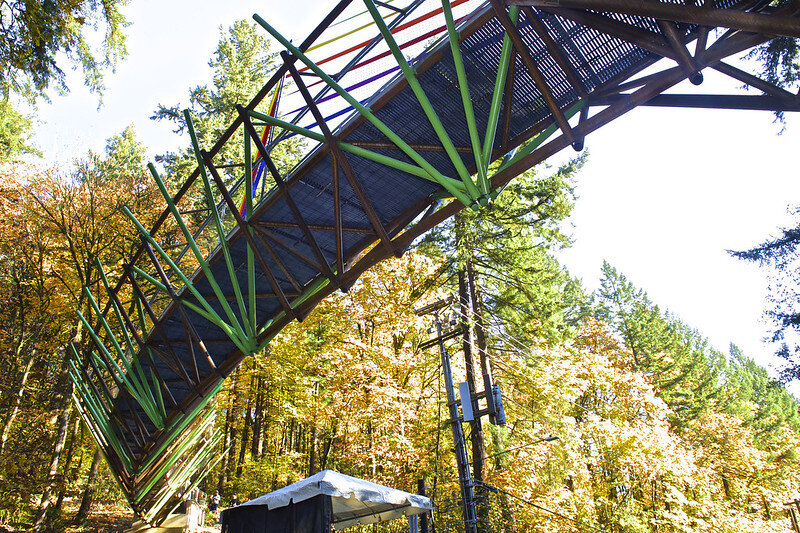
International Recognition for the Barbara Walker Crossing

48986622008_0b0a43319f_c.jpg

The Barbara Walker Crossing earned recognition from two major organizations this week: Collaboration of Design + Art in Public Spaces (CODA), an international clearinghouse for connecting designers and artists, and The Portland Garden Club.

CODA's international jury gave the Crossing top honors in Transportation and the Crossing also won one of the three People’s Choice awards, selected from among hundreds of entries worldwide. Have a look at the amazing company we're keeping. This is the first time the CODAawards process has resulted in a double winner. 

The Portland Garden Club awarded the Portland Parks Foundation with the Garden Club of America Club Civic Improvement Commendation in recognition of the creation of the Barbara Walker Crossing, connecting and providing a safe and scenic passage on the Wildwood Trail between Portland’s Forest Park and Washington Park.

20191027_090114.jpg

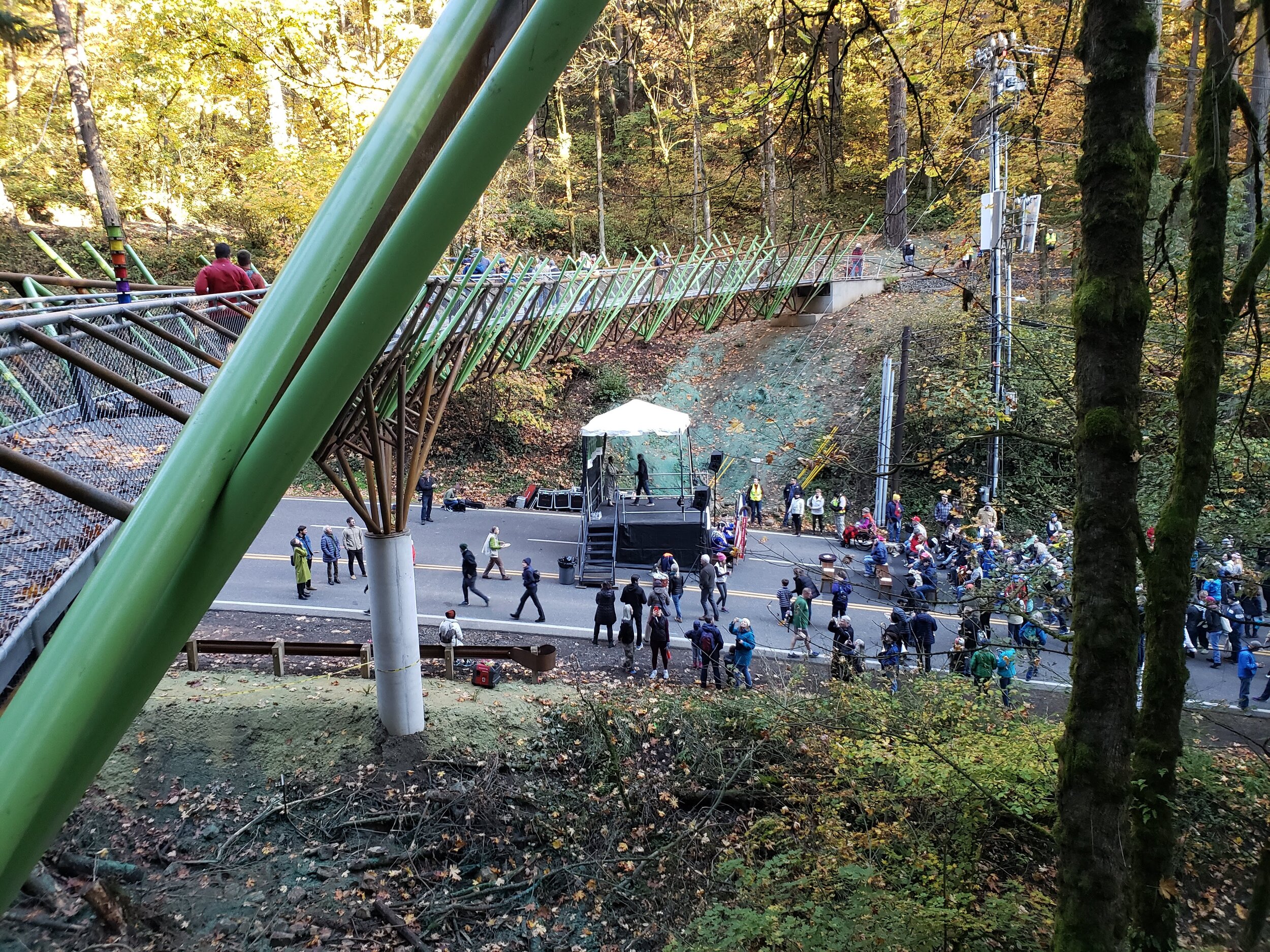
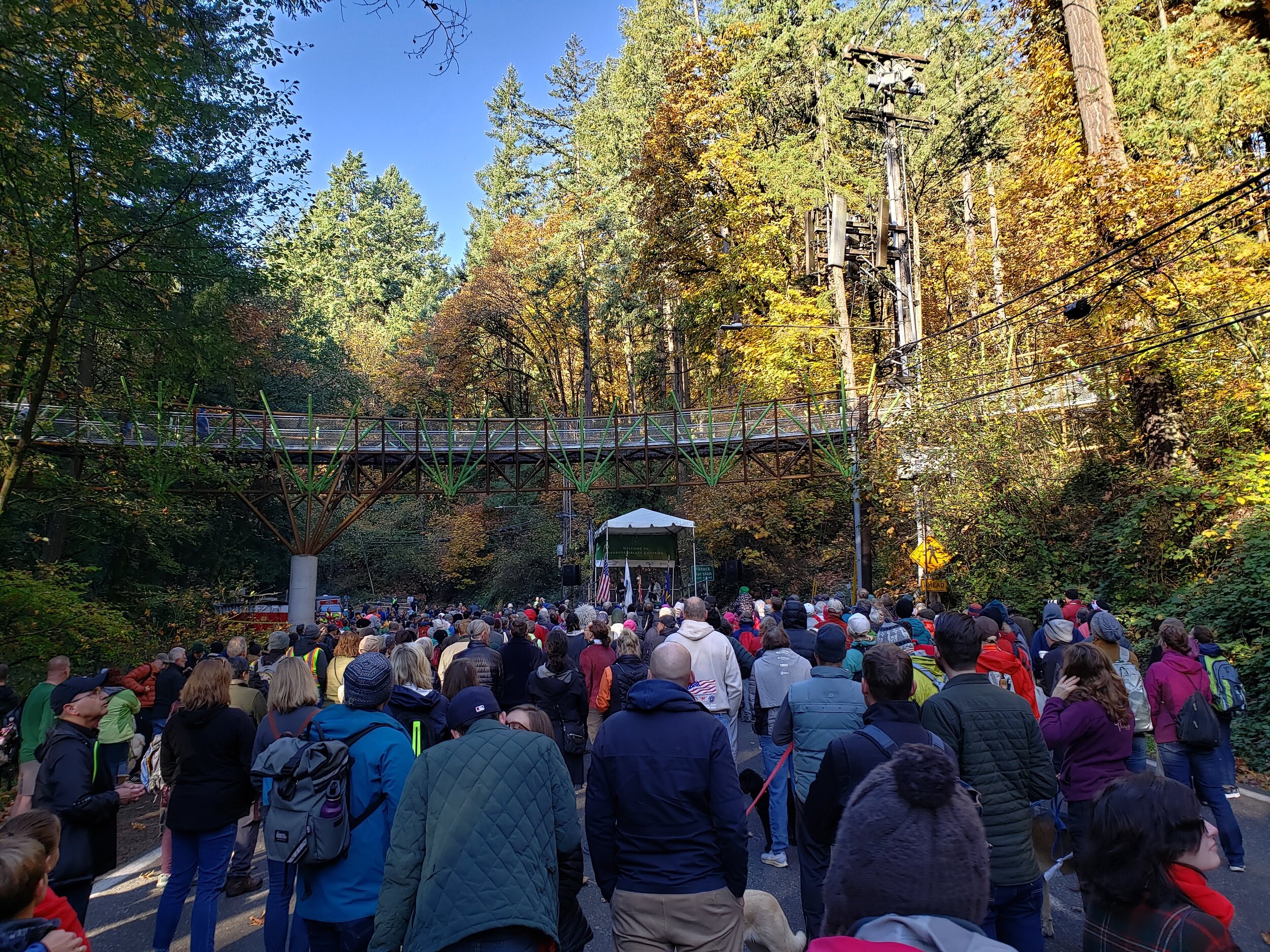
Completed last October, the Crossing was the Portland Parks Foundation's largest project to date and Portland's first "crowd-funded bridge."

An act of design activism, the Crossing was co-conceived by architect Andrew Wheeler and artist Ed Carpenter to elegantly solve a problem of the Wildwood Trail's dangerous, at-grade crossing of Burnside. Designed and shepherded by Carpenter for a decade, it ultimately was built by the Portland Parks Foundation in collaboration with Portland Parks & RecreationPortland Bureau of Transportation, and Metro. Over 900 individual donors contributed, along with major pro bono work done by the design/construction team, led by KPFFR&H Construction, Walker Macy, and SOJOregon's Kitchen Table helped with the crowdfunding campaign. Thank you to everyone who voted to help us win the CODA People’s Choice award and thank you to the huge team that made the project a reality—especially the hundreds of Portlanders who donated to make this the first crowdfunded bridge in Portland!

48987148887_323cb5281c_o.jpg

Find out more about the project on our Barbara Walker Crossing projects page.

Pints4Parks: Parks, Protests, and Soccer

The custom label from Gigantic's Portland Parks Foundation beer!

Join Timber’s Jack Jewsbury and PP&R’s Vicente Harrison to talk about the role of parks & recreation during racial justice protests & COVID-19

Join us for a happy hour conversation with two Portland heroes—Jack Jewsbury from the Portland Timbers and Thorns and Vicente Harrison, Portland Parks & Recreation's Security & Emergency Manager —for frontline reports from the soccer championships and our parks in the COVID/Black Lives Matter era.

Vicente Harrison (left) & Jack Jewsbury and his family (right)

Vicente Harrison (left) & Jack Jewsbury and his family (right)

And, for just $60 you can also both become a Portland Parks Foundation (PPF) member AND enjoy the conversation with 12 bottles delivered to your door of limited edition Pints4Parks beer specially brewed by Portland's own Gigantic Brewing Company in BottleDrop refillable bottles.

At this virtual event we'll get Jack's behind-the-scenes reports on our Timbers and Thorns playoff games in Florida and Utah. The retired midfielder and star is now the Timbers/Thorns director of business development, a parks lover, and PPF board member. Vicente, a veteran parks ranger who wrote a children's book on race and nature, will offer a frontline look at how his job and parks are changing in this challenging, exciting, turbulent era.

Join us for a virtual evening of like-minded folks who care about sports, parks, and making a difference in our city.

What’s that custom beer like?

The Peace & Kolsch is a brew inspired by the Kolsch’s that come out of Cologne, Germany, with a subtle balance of malt and hops. The Peace & Kolsch is light and drinkable with a crisp and clean finish. It comes in a refillable bottle that can be reused, making it the most sustainable choice! Simply return it to your local BottleDrop Redemption Center, or place it in your Green Bags to give your bottles another life!
— Gigantic Brewing Company

Ticket Options:

$60 - includes delivery of 12, 500mL bottles of Gigantic's Portland Parks Foundation beer (see restrictions below), membership to the Portland Parks Foundation, as well as access to the online event.

$10 - includes access to this online event.

Beer is provided by Gigantic in BottleDrop refillable bottles.

Restrictions on beer deliveries

1. Zip codes that qualify for delivery are: 97201, 97202, 97204, 97205, 97206, 97209, 97210, 97211, 97212, 97213, 97214, 97215, 97216, 97217, 97218, 97219, 97220, 97222, 97232, 97239, 97266, 97267, 97015, 97086.

https%3A%2F%2Fcdn.evbuc.com%2Fimages%2F106790394%2F168796147516%2F1%2Foriginal.png

2. You must be 21 years or older to receive beer. Customers will need to be present and able to show ID when case is delivered. During checkout you will select your preferred delivery day before the event. Gigantic will send out this blurb with their confirmation once they receive your order: “Expect delivery between 12pm (noon) and 6pm on the Delivery Day. We will text you just before we come to your house for delivery. We do need to see the face of somebody over 21 before we can leave the beer, but we promise to keep our distance.

A huge thank you to Gigantic Brewing Company for this unique opportunity!

“Portlanders for Parks” Community Campaign Launches

A Parks Levy will restore investments in parks and natural areas, and increase access to recreation opportunities for all Portlanders

Portland Parks Levy Campaign Logo_Rev.png

On July 22, the Portland City Council referred a five-year Portland Parks & Recreation (PP&R) local option tax levy to the November ballot.

The proposed levy will restore investments in parks, natural areas, and services and will dramatically increase access to recreation opportunities for communities of color, refugees and immigrants, and families experiencing poverty.

The levy "is an opportunity to make sure we continue to serve all Portlanders—and serve them better than we have before,” said Mayor Ted Wheeler, who as Parks Commissioner advanced the funding measure. He added, "This is a critical first step towards fulfilling our shared vision for a more stable parks bureau that can better serve all Portlanders.”

The proposed levy is also critically needed to reopen PP&R facilities and restart recreation programs as our community recovers from the coronavirus pandemic. The coronavirus pandemic, closure of community centers and pools, and cancellation of recreation activities have created a multi-million dollar deficit for Portland Parks & Recreation.

Portlanders for Parks launched today to support the levy, and urge Portlanders to vote yes this November.  

“The virus and economic downturn have hit all of us hard, but have had a disproportionate impact on low-income communities and Black, Indigenous and communities of color in Portland. This measure will help to ensure that all Portlanders – regardless of race, income, or background – have access to the Parks & Recreation programs we rely on,” says Jenny Glass, Executive Director of the Rosewood Initiative in East Portland.

Photo courtesy of Portland Parks & Recreation

Photo courtesy of Portland Parks & Recreation

The proposed levy would:

  • Protect natural areas, and plant more trees in park lands to help to ensure clean water in local rivers and streams;

  • Restore recreational programs, including fitness, arts, senior programs, youth programs and environmental education;

  • Improve access for all Portlanders by making our parks cleaner, safer, and more welcoming;

  • Preserve programs for children experiencing poverty, including a summer playground lunch program, life-saving swim lessons, outdoor camps, and recreation scholarships.

“We recognize the challenges that PP&R faces budget-wise and that communities of color will be disproportionately impacted by further cuts to service,” Tony DeFalco, Executive Director of Verde, wrote in testimony to Council. “We thank PP&R for its leadership to address budget shortfalls and to prioritize equity in utilization of new resources, and look forward to stable and secure funding for our parks system.” Verde also called on PP&R to engage low-income and people of color communities, and incorporate racial equity criteria to guide levy investments.

Before the coronavirus crisis, PP&R was evaluating options for more sustainable funding—options that would fund recreation programs and services for the community without depending on fees that are a hurdle many Portlanders with financial challenges. The proposed levy will not only mitigate the revenue impact of COVID-19, it will also fix this long-standing and inequitable reliance on fees.

“Unless this measure passes, Portland will face considerable challenges to maintaining playgrounds, community centers, restrooms, and more, forcing many closures,” says Randy Gragg, Executive Director of the Parks Foundation. “Without this measure, we will not have the equitable park system the community deserves.”

During City Council’s referral hearing, Portland State University Professor Vivek Shandas shared Google data showing parks have become the single most visited land-use in the region. And others testified to the powerful importance parks are playing as respites in the pandemic, gathering places for the Black Lives Matter movement, and critical habitat and cooling as the planet warms.

"The Covid-19 crisis serves as a stark reminder of how important our parks, natural areas, urban tree canopy and park programs are to the health, well-being and resilience of our communities,” said Portland Audubon Conservation Director, Bob Sallinger.  “This levy is urgently needed to ensure that PP&R can continue to provide and expand essential services, equitable access and  improve the ecological health of our neighborhoods at a time when those services are both desperately needed and at real risk.”

Photo courtesy of Portland Parks & Recreation

Photo courtesy of Portland Parks & Recreation

The proposed levy will also prevent further job cuts for the frontline parks workers who care for our parks, and provide recreation services for Portlanders.

“Portland’s recreation programs are crucial in providing free and low-cost opportunities for kids to stay safe and healthy, especially when schools are closed or limiting kids’ access,” says Tom Colett, Lead Field Representative for Laborers’ Local 483, which represents hundreds of workers who work at community centers, SUN schools, and parks and wildlife locations throughout Portland. “But Portland has had to make deep cuts to recreation programs – just at the moment when local families need them most. This measure will help to restore these vital recreation programs.”

LEVY BACKGROUND

The proposed levy rate of .80 per $1,000 will raise an estimated average $48 million per year over five years. For a home with an assessed value of $200,000, the owner would pay about $13 a month.

If you or your organization would like to volunteer or endorse, contact us at levy@portlandpf.org.


Small grants promote access and outdoor education to underserved youth and their families

Portland Parks Foundation is pleased to announce the latest round of winners in our Small Grants Program, PDX Alliance for Self Care, Portland Free Play and Urban Nature Partners PDX. Established with funds from parks patron Nancy Hebb Freeman, the program provides -capacity-building support for organizations whose work aligns with PPF’s mission to ensure a thriving and accessible parks system.

At a time where COVID-19 has shifted learning to online, reduced social interaction and increased concerns about child obesity and depression, PPF is proud to partner with three organizations committed to increasing opportunities for Black, Indigenous and people of color, immigrant/refugee, disabled, low-income and all marginalized youth and their families in public parks and nature.

PDX Alliance for Self Care

PDX Alliance for self care logo.png

PDX Alliance for Self Care is a volunteer-organization addressing underrepresentation of Black, Indigenous and people of color (BIPoC), LGBTQ2SIA+ (Lesbian, Gay, Bisexual, Transgender, Queer, Two Spirit, Intersex, Asexual, plus other non-hetero orientations or genders), immigrant/refugee, disabled, low-income and all marginalized youth and their families in public parks and nature. Founded on a belief that this work should be led by those most impacted, local BIPoC educators and community leaders provide summer nature and mindfulness camps in our public parks. The grant will enable the Alliance to expand their outreach, improve their organizational communications and marketing. PPF funds will be used to support hiring of a graphic designer to create a logo to brand their program as well as translating the information into more languages that can be distributed by educators, newspapers and culturally-specific websites allowing the Alliance to reach more marginalized youth and their families.

Portland Free Play

Kids at play 1.jpg

A self-proclaimed, “lean and scrappy volunteer-run organization,” Portland Free Play partners with Portland Parks & Recreation Free Lunch + Play program to deliver pop-up playground events to park and community sites where youth have less access to these experiences. Portland Free Play is currently working on a plan to expand to 12 different Lunch + Play sites in 2020, specifically focusing on East Portland where many youths live in parks deficient neighborhoods. PPF grants funds will be used to develop a fundraising strategy with a goal of raising enough funds to hire a part time position to administer and expand the program.

Urban Nature Partners PDX

DSCF2941.jpg

Urban Nature Partners PDX fills a gap in outdoor programming for youth from diverse, low-income families residing in Cully, Lents, Portsmouth and outer NE Portland. Their mission is to increase historically marginalized Portland communities’ access to and opportunities for meaningful experiences in urban parks and outdoor programs. Through their partnerships with local BIPoC and immigrant/refugee organizations, they provide mentor-youth programs in public parks and natural areas led by and for BIPoC communities.  These pairings also engage each youth’s family with monthly family events in natural areas and offer free summer camp opportunities in public parks after the first year of mentorship. PPF funds will support direct costs to deliver Spanish speaking programming support and their expansion to partner with youth in outer NE Portland.

Protests Then and Now: Keller Fountain at 50

Watch the video of opening day at Keller Fountain, June 23, 1970

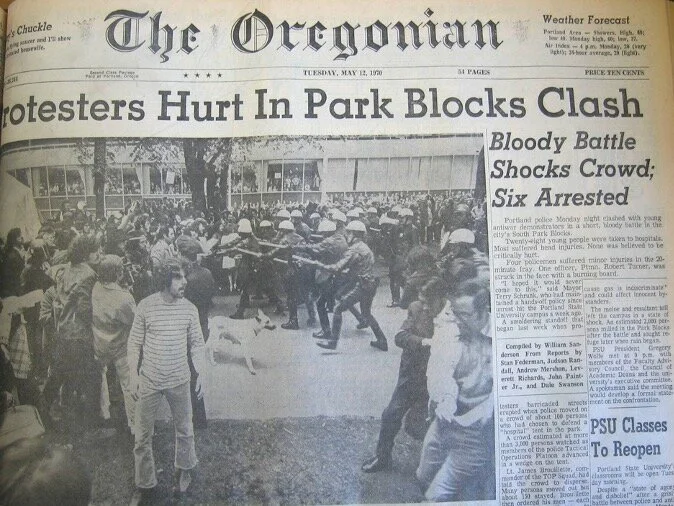
The last time fed-up, determined, energized protesters roiled Portland for days, the Portland’s Parks Commissioner called in the police’s riot squad. Thirty-four people ended up in the hospital. And it happened just days before the ribbon-cutting of Portland’s most globally renowned public park. The year: 1970.

Today that park—Keller Fountain—turns 50 years old. Heralded in the New York Times as “the most important urban space since the Renaissance,” its resplendent waterfalls are turned off due to the pandemic. (For more information on the anniversary, go to halprinconservancy.org) But given our own moment of turmoil and change, the anniversary offers a good moment to ponder its importance and the central roles public parks and squares play in Portland’s civic life.

The recent days’ protests in support of Black Lives Matter have often begun and ended in parks. In Pioneer Courthouse Square, Indigenous people have gathered to dance and sing, and frontline health care workers in scrubs and masks have taken a knee in solidarity. Meantime, for weeks, parks have offered fresh air, nature, and the distance to see our neighbors to safely sooth the stresses of the pandemic. But as spring turned to summer in 1970, the city’s oldest park became a vicious battleground, while its newest—Keller—offered a splashing celebration of the power of new public space.

Forecourt Fountain (Keller Fountain’s first name) opened in 1970 to international renown. Ada Louise Huxtable writing in the New York Times described it as “new kind of people’s plaza” and likened to to Rome’s Trevi Fountain and Piazza Navona but with a “geologic naturalism” befitting the Pacific Northwest. But the month before the ribbon-cutting, a very different scene had unfolded in on of Portland’s oldest parks just four blocks away in response to the National Guard gunning down four Kent State University students protesting American war on Vietnam.

pnca+talk.jpg

The Oregonian’s Douglas Perry recently recapped what became known as “Battle of the Park Blocks,” when students from Portland State University, Reed College, and Lewis & Clark College and others built nine barricades around South Park Blocks. As elsewhere across the country, the Kent State killings were the trigger. The transport of nerve gas through Oregon and the imprisonment of Black Panther Bobby Seals were others. The result: a three-park-block “liberated zone.”

As tense occupation unfolded, Mayor Terry Shrunk turned down Gov. Tom McCall’s offer to send the National Guard. But after five days, Shrunk’s protest point man, Frank Ivancie, then the Parks Commissioner, had had enough. He sent in Portland Police Bureau’s riot squad armed with clubs who quickly, brutally cleared the area. Thirty students and four police officers ended the evening in the hospital.

The next day, 3,500 people marched on City Hall—and not just students. “I want to cry,” an elderly woman protester told a film crew. “Sure, we know there are radicals  . . . but, my God all mighty, when are we going to step forward and start helping?”

As tensions ebbed in days following, amazingly, strangely even, city officials proceeded with the long-planned opening of Forecourt Fountain.

The new city park was the last of four connected fountain plazas designed by Lawrence Halprin and Associates, then arguably the most renowned landscape architecture firm in the world. Inspired by natural landscapes, the first two—Lovejoy Fountain and Pettygrove Park—completed in 1966, opened Portlanders’ eyes to what public space in the middle of an otherwise pretty dreary downtown could be. Lovejoy earned a three-page pictorial in Life, “Mid-city Mountain Stream,” then, one of the nation’s preeminent magazines, circulation 13-million.

The plazas’ history is complicated. On the one hand, they were the central features of Portland’s first urban renewal area for which a 55-block, largely Jewish and Italian immigrant neighborhood was cleared. Some residents and business-owners fumed at the city. Others welcomed the opportunity to move out the district’s many decrepit firetrap apartments into some of the city’s first publicly built affordable housing. On the other hand, Lovejoy Fountain instantly swarmed with people becoming a kind of downtown swimming hole. In the months following, a grassroots movement began to turn Portland’s riverside highway into what became Tom McCall Waterfront Park. The Portland Planning Commission rejected a full-block, 12-story parking garage and called for a new park instead—what years later became Pioneer Courthouse Square.

Halprin and his wife, Anna Halprin, often collaborators, were charismatic counter-culturists. He designed everything from fountains to regional plans across the world. She choreographed the earliest “postmodern” dance, protests for free speech, and a then-groundbreaking series Black/white encounter groups to deal with racial tensions. Halprin’s lead designer on the project, Angela Danadjieva began her career designing avant garde film sets. Halprin designed the Portland plazas to be stages for a new kind of nature and theater in middle of the city. And with its 30-foot cascade of 30,000-gallons of water per minute, Forecourt was like nothing any city had built before—at least not since the Renaissance.

As officials gathered for the June 23 opening, so did a lot of students. Still tense from May’s clash, the cops looked warily on. Ironically, a dance group in bright blue tights twirled batons. Officials proudly spoke, and then the architect, Lawrence Halprin, took the microphone. “These very straight people somehow understand can be all about,” said Halprin—“straight” being the counter-culture’s label for establishment power. “So as you play in this garden, please try to remember, we’re all in this together . . . I hope this will help us live together as a community both here and all over this planet Earth.”

Halprin jumped into the fountain. So did most everyone else. People joined hands and danced.   

As with the Halprin fountains, many of our parks have complicated histories. Consider Kelley Point Park:  an important traditional gathering place for Indigenous people at the confluence of our two major rivers, but it’s named for a deranged early Oregon promoter who visited the state once and tried to market the site as a future lower Manhattan. Heron Lakes Golf Course and Delta Park, also grounds important to Indigenous people, were first developed as Vanport—a city housing thousands of black shipyard workers—washed away by a 1948 flood.  Every June since 1970 (though canceled this year due to COVID-19), it has hosted the Delta Park Powwow, one of the region’s largest gathering of tribes.  

As Portlanders lurch through history, parks change with us. And, as recent weeks—and June 23, 1970—have shown, our parks can be places for us, together, to change our city.

"as you play in this garden, please try to remember that we're all in this together" - Lawrence Halprin at the dedication of Forecourt Fountain

"as you play in this garden, please try to remember that we're all in this together" - Lawrence Halprin at the dedication of Forecourt Fountain