Parks - Where Memories are Made

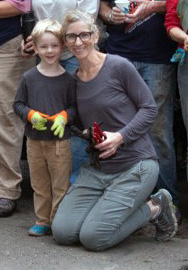
PPF Board Chair Gina Eiben volunteering with one of her children at the 2015 Parke Diem. Photo taken by Stephen Brown in Washington Park

PPF Board Chair Gina Eiben volunteering with one of her children at the 2015 Parke Diem. Photo taken by Stephen Brown in Washington Park

The phrase ‘sense of place’ has become a buzzword for those that work with land conservation for at least a decade.  It is often envisioned as a physical aspect of the landscape itself – a beautiful tree, rich agricultural soil, a field where a historic event took place. As places in Portland come and go with development and time, people’s sense of the places that mark important feelings, memories or values inevitably alter as well.

Often all that is left of a place are the citizens that keep the memories, big and small, that define our city. Thankfully, Portland’s nearly 12,000 acres of parkland have been reserved for generations of these memories to collect and enrich our lives. For our 15th anniversary year we’ll be talking to folks whose big and small memories of Portland’s park spaces shape their lives and the way they view the city itself.

We asked what parks mean to our Board Chair Gina Eiben. A transplant like many Portlanders these days, parks have helped her establish deep roots within our city.

How did you come to Portland?

I grew up in Cincinnati, Ohio.  I began my legal career in Cleveland, Ohio where I practiced law for two years before relocating to Portland.  I was drawn to Portland long before I moved here - amazed by the abundance of natural beauty and the prevalent use and enjoyment of the outdoors.  When I first visited Portland in November 1998, my sister took me on a walk through Washington Park.  It was a torrential downpour and we were soaked, but that didn’t stop us or the crowd of turkey trotters from enjoying the lush scenery. I, like so many others, fell in love with Portland.  Since moving to Portland in 2007, parks have proven to be a great source of entertainment, relaxation and refuge through the various phases of my life.  

. . .parks have proven to be a great source of entertainment, relaxation and refuge through the various phases of my life.
— Gina Eiben

How have Portland’s parks played a role in your life?

When I finally relocated here in 2007, and didn’t know anyone, I did a lot of hiking by myself in Forest Park.  When my now husband moved here, and we got a dog, the three of us spent numerous weekends hiking and relaxing in Portland parks.  Now that I have two sons, ages 2 and 5, we regularly walk to the many wonderful parks near our neighborhood in NE Portland.

Some of my best memories include my inaugural walk through Washington Park with my sister in 1998.  In 2010, my husband and I were married in the Shakespeare Garden in Washington Park.  I was delighted and proud to welcome my friends and family, most of whom had never been to Portland, to experience the city, but especially the park.  On a sunny afternoon in 2011, I strolled through the Rose Garden in Washington Park experiencing the wonder of labor, and waiting to welcome our first son.

Do you feel parks are important to Portland’s identity?

I believe that Portlanders are especially lucky to have the natural resources that we do. The city is blessed with natural beauty that can’t be recreated or substituted.  Portland’s parks are a real treasure.  Parks have something to offer to every person in this city – nature is a great equalizer.  I love our parks.  I want to maintain what we have and continue to grow the prevalence and accessibility of parks throughout the city.  I don’t want to see our parks be taken for granted.  In our fifteenth year, the Foundation has an energy, sense of stewardship and commitment to equity that is inspiring.  I feel proud to be part of such a capable and focused organization whose work is essential to protecting and promoting park space and programs throughout the City .

Parks are more than just empty places in the city.  They deserve to be preserved with the same care as the memories created within their boundaries.  We hope you will join us to make them even better for generations to come.
 

450,000+ Hours For Portland's Parks

Good cities like Portland are made up of good citizens that give back and advocate for their communities. While parks may seem like an effortless part of Portland's identity, the truth is that it takes over 450,000 hours of volunteer effort to keep these vital community spaces beautiful year-round.

For this week's blog, we'll look at one inspirational example from a much larger city of what volunteers, parks foundations, and private investment can do for park spaces. While Portland and New York are very different cities, it is easy to find inspiration in this story of park revival.

Lynden Miller, noted advocate and internationally recognized public garden designer, describes her life's work in beautifying New York City and other urban spaces around the U.S. She articulately summarizes the extraordinary impact of beautiful, green urban spaces for residents, businesses and the environment. Beautifully filmed and scripted.

Top Portland Park Views

Long days and warm nights make for fine evening picnicking opportunities in Portland.  Below are our favorite Portland views in alphabetical order that afford plenty of exploring or dining opportunities. Pack that basket, hop on your bike and head out to a vista near you!

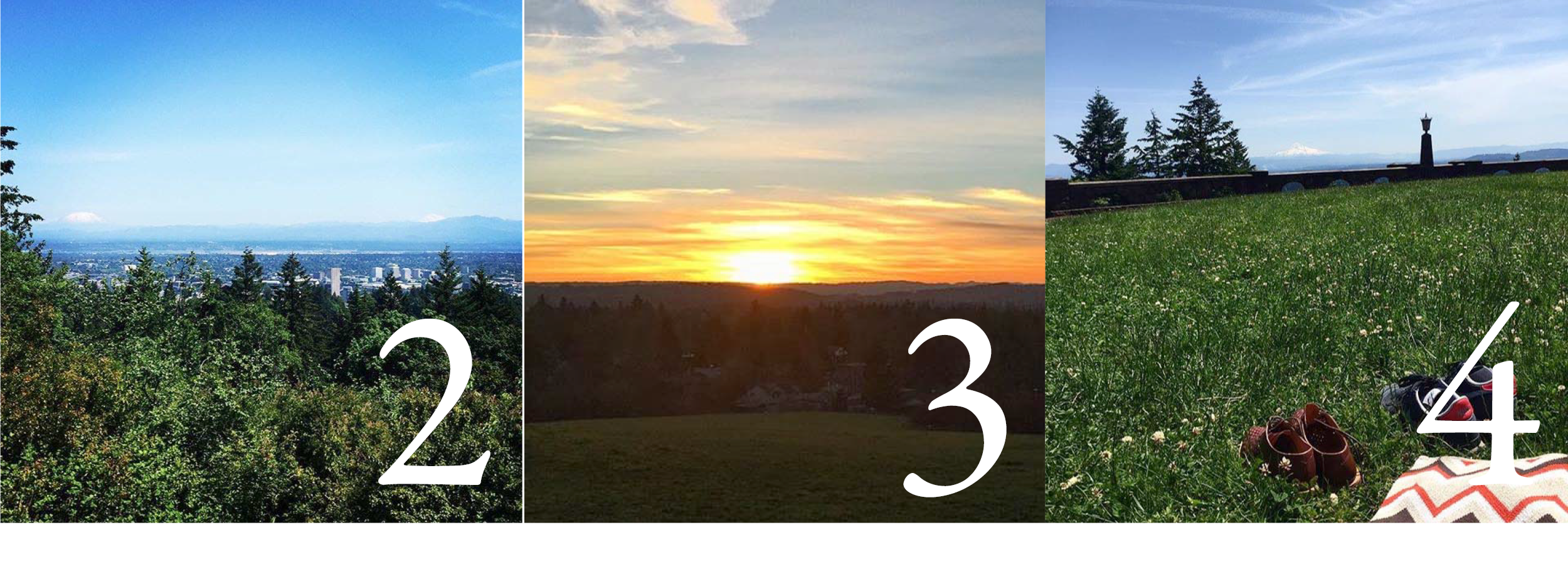
1. Clatsop Butte [pictured above]: Clatsop Butte and neighboring natural area make this a perfect afternoon exploration.  Whether viewing Mt. Hood from the green grass or walking the wooded paths, this park will provide a feast for the eyes.

2. Council Crest: This former amusement park location boasts one of the best views of the metro area and beyond.  On a clear day, one can see Mt. Hood, Mt. St. Helens, Mt. Adams, Mt. Jefferson and Mt. Rainier from this park.

3. Dickinson Park: This tucked away SW Portland Park displays sunset views silhouetting the hills facing westward.  Long meadows provide plenty of space to and enjoy the dusk colors.

4. Joseph Wood Hill Park – a.k.a Rocky Butte: This historic park at the top of another cinder cone is well worth the breathtaking views of the Columbia Basin, Cascades and beautiful stonework done by the WPA in the 1930s.

5. Kelly Butte: This rustic wonder on the East side of Portland is worth the visit for those that are courageous and aren’t afraid of explorations off trail.

6. Powell Butte: The varied landscape of this butte is topped by a spectacular view of the Cascade Range and neighboring foothills. Well worth the hike to the top.

7. Mocks Crest – a.k.a Skidmore Bluffs: Part of a geologic form called Willamette Escarpment that runs from Milwaukie through North Portland; this spot is one of the best along the way. The location of this park right on the edge of the escarpment makes it a perfect sunset viewing location.

8. Mt. Tabor: This Portland favorite hosts a little of everything within its boundaries and boasts one of the best views of the Portland cityscape.

9. Pittock Mansion: Just a few feet in elevation below Council Crest, Pittock Mansion’s views of Portland and the Cascades fill photo books of most tourists and locals alike.

10. Terwilliger Boulevard: With 6 identified viewpoints of the river, city and beyond, Portland’s 100+ year-old parkway is worth a visit by foot or bike.

Thank you to all of the Instagram friends that helped make this blog possible.  Follow us on Instagram to see park photos that will beautify your day! Photo credits in order:

1. @osu4hicyi
2. @kdulong
3. @emburns88
4. @cara.jack
5. @ckbilsborrow
6. @thebeerdedrunner
7. @gabrieltrieger
8. @fat.rob
9. @carafernandez
10. @nikkelley1

Parks Provide More than Shade

Parks are truly Portland’s living room during the summer months. Other than a nice shady picnic spot, what do parks really provide Portlanders? Here’s a roundup of our top blogs this year on the value parks bring to our city. That leads us to ask – how do parks and park programs help you?

As we began to celebrate our 15th anniversary year at an open house last week, many folks talked about why parks and private support for parks are important.  Now it’s your turn - share your story and you can win a pair of our 15th Anniversary shades just in time for the summer sun!

We’ll see you at that perfect picnic spot this month rocking your new sunglasses!

We’ll see you at that perfect picnic spot this month rocking your new sunglasses!

1.    Health
2.    Recreation
3.    Economic Development
4.    Environmental Health
5.    Wildlife Habitat
6.    Community
7.    Education

Thanks for helping support Portland’s parks and park programs that give so much back year-round. Now get out there and enjoy the park system you are helping build!


Our 11,000+ Acre Gym

PPF Board Member Charlie Baker playing baseball at Scavone Field in Westmoreland Park. Charlie is a supporter of recreation both at work at Nike and at play where he participates in a championship-winning local baseball team.

PPF Board Member Charlie Baker playing baseball at Scavone Field in Westmoreland Park. Charlie is a supporter of recreation both at work at Nike and at play where he participates in a championship-winning local baseball team.

May is National Fitness Month and it only takes a moment in Portland’s parks to see their importance in our exercise routines.  On one sunny evening this spring a stroll into to my neighborhood park looked like an introduction scene from a fitness video.  People were walking dogs, playing basketball, jogging, stretching, and children were biking and playing on the playground structure.

When it comes to providing safe places for youth to exercise, parks are an especially important resource in our city.  Many studies have found that if children have easy access to safe parks and playgrounds, they are more likely to engage in physical activity and less likely to be overweight.

The Office of Disease Control and Health Promotion states that youth should get 1 hour of moderate to vigorous physical activity per day.  Unfortunately, today many children aren’t getting the exercise they need and about 12.7 million children in America are overweight or obese.

One of PPF’s board members, Charlie Baker, can testify to the powerful role parks have made in his pursuit of life-long fitness and recreation. “I’ve been an athlete my entire life.  The very first place I learned to play tee-ball was in a park.  In fact, I still play baseball 40+ years later at places like Lents Park, Gabriel Park, and Pier Park.”

Unfortunately, some areas of east and northeast Portland still lack a fully developed park within reasonable walking distance, and many streets still do not have sidewalks for children to get to park locations. As a 2014 Portland Parks & Recreation press release stated, “Two out of every five households in this part of town do not have easy access to a City of Portland park, in stark contrast to the rest of Portland where four out of every five households live within a half-mile of a park or natural area. . . Demand for recreational services is high, and closing this “play gap” is a priority for Portland Parks & Recreation and Commissioner Fritz.”

The path forward seems simple. As Charlie puts it, “If you have a body, you are an athlete. . . athletes need safe and well maintained places to play.” The current effort to help build Cully Park by our nonprofit partner Verde is a good example of what we can do to help children access the recreational opportunities they need to stay healthy.  The Portland Parks Foundation is committed to help fundraise to build Cully Park and we look forward to partnering further with park supporters until every Portland child can access the outdoor recreation they need.

Portland Wanderings

Oregonian Reporter Jamie Hale on a Hike

Oregonian Reporter Jamie Hale on a Hike

If you follow the Oregonian travel section you’ve probably noticed some excellent articles this spring giving a ‘behind the scenes’ look at some of the best walks and hikes in Portland.

We reached out to the reporter, Jamie Hale, to learn more about his experiences in Portland’s parks. 

What was your motivation for the series?

I love all the hiking opportunities within Portland proper, so I wanted to create a comprehensive and user-friendly guide that compiled them in one place. Too often when we talk about “Portland hikes” we’re talking about places outside of the city, which is great, but that ignores all the places you can get to without taking a day trip.

What was it like to hike around Portland?

. . .there’s something about wandering that gives feast to the soul.
— Jamie Hale

The process of putting this together was very hands – or rather, feet – on. I went out on about a dozen hikes in the span of three weeks, taking photos, notes and learning about the history of each place. I wanted to write individual in-depth posts on each, because so many of our local parks have such fascinating historical backgrounds. I’m the kind of person who likes to be as thorough as possible, but I had to back off a little on this one and not expect myself to know every detail about every trail in the city. Besides, that leaves some hidden gems around town too.

Any especially wonderful or frustrating experiences while writing the articles?

The wonderful thing was spending my work days out on the trail, of course, and learning some bits and pieces about our city’s history in the process. The most frustrating piece was figuring out how to cover Forest Park, which is simply too expansive to write about in one, two or even three different articles. Readers will have to explore, and make their own hikes out there.

Anything else about your urban hiking adventures we should know?

While I highlight these regimented hikes, I always like to encourage people to find their own trails as well. You get such a richer experience out of nature when you make your own personal connection with it. Following directions is fine, but there’s something about wandering that gives feast to the soul.

Summer Free For All Picks

Pull out the picnic baskets because it’s time for Summer Free For All (SFFA) season again in Portland.  SFFA combines 250 concerts, movies, daytime playground activities and lunch, and swimming lessons in parks - all for free, all across Portland. The goal of the program is to . . . “empower Portlanders to create and cultivate community by providing free, accessible, family-friendly summer activities that celebrate our city’s growing cultural diversity.”

The full schedule of events with locations can be found here and our ‘top pics’ below can be accessed by clicking on the map below. In addition to the free summer events, there are many other low or no cost recreational activities scheduled in parks across Portland this summer like the 5k running series, or the free fitness classes in parks. These summer activities cannot happen without community support, and the Portland Parks Foundation is the place for individuals to donate to these wonderful programs.  Please consider donating here today to keep this Portland tradition alive.

PPF's Top 10 Movies and Concerts this Summer

See all 250 at the Portland Parks & Recreation's website

Souvlaki Coyote and Other Tales of Urban Wildlife

It is hard to miss the life bursting forth in Portland's parks in the spring.  Flowers are blooming, people are out getting vitamin D, and wildlife are enjoying the bounty spring brings. Parks are important habitat for wildlife in our urban core, and whether they pose a joy or a challenge, wildlife are permanent citizens here in Portland. The blog below is reprinted with permission from The Nature of Cities blog and is written by Bob Sallinger.


About the Writer:Bob SallingerBob Sallinger has worked for Audubon Society of Portland since 1992 and currently serves as the Society’s conservation director. He lives in Northeast Portland with his wife Elisabeth Neely, two children, a dog, cat, go…

About the Writer:
Bob Sallinger

Bob Sallinger has worked for Audubon Society of Portland since 1992 and currently serves as the Society’s conservation director. He lives in Northeast Portland with his wife Elisabeth Neely, two children, a dog, cat, goats and chickens.

Much of the fabulous writing on The Nature of Cities blog site to date has focused on integrating the built and natural environment, erasing, or at least softening the lines that separate the natural and the manmade. I would like to shift focus a bit and explore the intersection between people and wildlife and suggest that we would also be wise to consider how we integrate animals into our urban stories, poems, art, culture and collective narrative. We need to bring the same level of creativity and imagination that we are currently investing in transforming our physical landscape into repopulating our mental landscape with the diversity of life that surrounds us.

In short, we need to do a better job telling animal stories — urban animal stories.

I am not talking here necessarily of ecology, biology and natural history, although ecological literacy is of critical importance. I am taking at least one step further back into the realm of mythology, legend and folklore, about how we tell and retell our own story in a way that truly recognizes wild beings as fellow travelers on our urban landscapes.

For many years I ran Portland Audubon Society’s wildlife hospital. There we treated upwards of 3,000 injured wild animals and responded to more than 15,000 wildlife related phone calls each year. The vast majority of both calls and animals emanated from the urban and suburban landscape. One of the indelible impressions from those years was how often somebody would walk into our center having taken significant time out of their busy day to deliver an injured animal, and ask us some variation on “what is it and why is it here?” They would insist that until that very morning, when the animal was dragged in by the cat or slammed into their kitchen window or collided with their car, they had never seen this creature in their neighborhood before. We would slowly open the box only to find ourselves eye to eye with…a crow…or a robin…or a scrub jay…or a fox squirrel. Often however, when the same people returned a few weeks later to pick-up the repaired animals for release, they would tell us that their neighborhood was suddenly teaming with never before seen wildlife. A connection was made…eyes were opened.

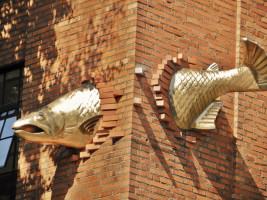
Fish art on downtown Portland, Oregon (USA) building, Photo by Bob Sallinger.

Fish art on downtown Portland, Oregon (USA) building, Photo by Bob Sallinger.

The human mind is good at filtering information and more than 35,000 years after humans first painted wild animals on cave walls, we have done a remarkable job of exorcizing wildlife from our consciousness. We don’t expect to see wildlife in our cities and therefore we don’t…until something or someone alters our expectations.

Those animals we treated at our hospital were sad and broken, but at the same time they also painted a rich tapestry of stories about how wild animals live and die in our urban landscape and how they interact with one another and with us. These stories are not the stuff of field guides, PhDs or wildlife management plans. They are funny and sad and weird and mysterious…sometimes they are mystical.

They are messy too.

Raccoon as urban trickster. Photo by Michael Durham.

Raccoon as urban trickster. Photo by Michael Durham.

If we restore it, critters will come, but we are not always sure what to do with them when they get here. Coyotes run off with cats, raccoons roll garbage cans, birds slam into windows, deer browse grandma’s flower beds, otters crack shellfish on the decks of high priced yachts…they are our own modern day tricksters.

Throw a high concentration of humans into the mix and the opportunities for mayhem increase exponentially. Among my favorite vignettes: the woman who wanted me to suggest a natural area to release her pet alligator. It was cute, apparently, when she bought it, but now it is three feet long, won’t stay in the bathtub and seems inclined to eat the kids and Chihuahua.

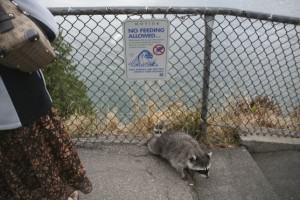
Apparently they don’t read the signs. Photo by Bob Sallinger.

Apparently they don’t read the signs. Photo by Bob Sallinger.

The gentleman who graciously shared his hot tub with the neighborhood raccoons because “all the wetlands have been filled” and could not understand why the ungrateful little beasties decided to dismantle it one day while he was at work.

The lady from the Greek restaurant who delivered leftover souvlaki to a street corner in an upscale Portland neighborhood each morning to feed the local coyotes who promptly began associating all people with restaurant handouts.

Nursing moms who suckle orphaned raccoons (yes, really… and it happens more often than you might think!). Working on urban wildlife management issues is sometimes a bit like living inside of an extended “Far Side” cartoon.

A friend who works as an urban natural resource planner once told me that 90% of her job was trying to get people comfortable with “messiness.” She is right. A big part of the challenge before us is integrating messiness into a culture that increasingly prioritizes higher and higher levels of organization.

Souvlaki Coyote on the prowl in downtown Portland, Oregon (USA)

Souvlaki Coyote on the prowl in downtown Portland, Oregon (USA)

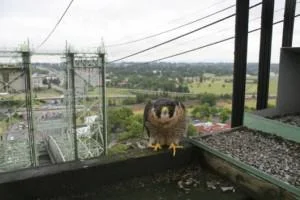
Over time I came to realize that wildlife rehabilitation was about fixing broken animals, but it also was just as much about being a chronicler of the animals in our midst. I slowly realized that the succession of stories that I heard day in and day out were indelibly transforming my own mental map of the city. As I move about Portland now I can’t help but transpose those stories onto the landscape. That corner is where coyote loped across the highway and disappeared behind a bar….this fire escape is home to a pair of red-tails that sometimes bop high-rise construction workers that intrude upon their airspace…that bridge is where a pair of Peregrines have nested since 1994 and fledged 58 young…and so on.

Peregrine nesting on Portland Bridge. Photo by Bob Sallinger.

Peregrine nesting on Portland Bridge. Photo by Bob Sallinger.

I can already hear the lamentations of my friends on the scientific community: “you are talking about anthropomorphizing wildlife—that’s the last thing we need.”

Actually I am not.

I am after something different here.

How do we create stories that fundamentally reconnect our communities with the life forms that surround us? The types of stories that imbue our urban landscape with the magic, mystery, ambiguity, messiness…inspiration that comes with a recognition that we are not alone…we weren’t even here first.

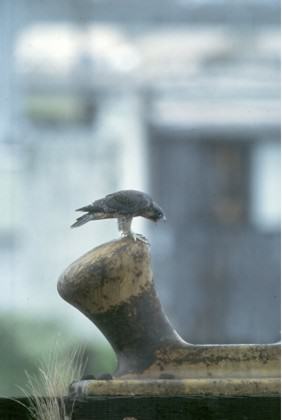
Fledgling Peregrine exploring Portland’s industrial landscape on foot. Photo by William Hall.

Fledgling Peregrine exploring Portland’s industrial landscape on foot. Photo by William Hall.

Our lack of awareness plays out subtly as we consider policies to re-green our landscape. Too often our decision-makers and the community at large view wildlife as something we should consider adding as opposed to recognizing wild animals as something that has always been and will always be part of our urban landscape. In a city like Portland, which sits at the confluence of two great rivers, wild animals will continue to live upon and migrate through our landscape. The only question is whether we will provide for their needs when they are here.

There are signs of progress. I am intrigued by the proliferation of urban wildlife webcams. Several years back, Portland Audubon collaborated with a local television station and placed one above a pair or Red-tails that nest on a downtown fire escape and “Raptor Cam” was born. As something of a Luddite, I was initially skeptical and frankly appalled by the substitution of digital experience for direct experience.

Raptor Cam Red-tail on nest. Photo by Dieter Waiblinger.

Raptor Cam Red-tail on nest. Photo by Dieter Waiblinger.

Half a decade later, I see it differently. Each year the site gets nearly a million hits as people track these birds like a soap opera. They anticipate and celebrate and grieve and discuss and opine on line with one another. I hope and wonder if perhaps it causes them to look skyward more often when they actually are outdoors.

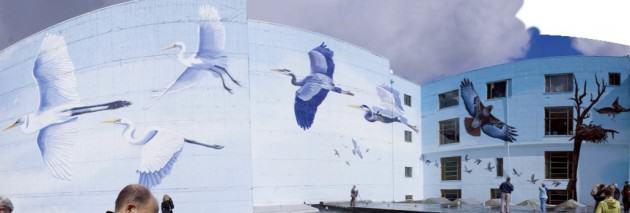
My friend Mike Houck of the Urban Greenspaces Institute (and who also writes on this blog) was after the same type of awareness when he commissioned a giant mural of our urban birds on an bare mausoleum wall overlooking Portland’s first natural area at Oaks Bottom and when he convinced a local brewery to name a microbrew after Portland’s official city bird, the Great Blue Heron.

Oaks Bottom Mural, Portland, Oregon, commissioned by Mike Houck. Photo by Nelson Photography.

Oaks Bottom Mural, Portland, Oregon, commissioned by Mike Houck. Photo by Nelson Photography.

I see it as well in books like Wildwood by Colin Meloy and Carson Ellis which transforms Portland’s Forest Park into an impassible wilderness occupied by baby snatching crows and scheming coyotes. Even the television show Portlandia, with its ubiquitously referenced (at least in Portland) “Put a bird on it” sketch edges towards what I am after.

Wildwood by Colin Meloy and Carson Ellis.

Wildwood by Colin Meloy and Carson Ellis.

Restoring ecologically healthy cities will require the participation of a far broader cross-section of the urban population than is currently engaged, whether that is naturescaping backyards, reducing nighttime lighting to prevent migratory bird strikes, housing cats indoors, or funding green infrastructure. At Audubon we often talk about the conservation continuum of appreciation, understanding and action, but I think sometimes we skip a step, perhaps the most vital step, of simple awareness. I think we underestimate the degree to which the concept of “urban wildlife” remains an anomaly for much of the populace. People can’t care if they are not aware…

Wildlife of Portland Poster produced by Portland Bureau of Environmental Services to raise awareness of urban biodiversity.

Wildlife of Portland Poster produced by Portland Bureau of Environmental Services to raise awareness of urban biodiversity.

This site has attracted an amazing array of experts already but I hope as it continues to expand it can perhaps pull in some poets and storytellers. To that end I will leave those who have read this far with one of may favorite urban wildlife stories. It involves a crow named “Havoc” that I came to know several years ago. It has been more than a decade since I last saw him, but he has forever altered the way I look at crows.

One of Portland’s more unique residents was a crow appropriately dubbed “Havoc.” Havoc was discovered in downtown Portland where he spent his days drinking out of the Benson bubblers, dodging traffic and barking at blond women. Our best guess is that he had been illegally raised as a pet and then set free.

Eventually his antics resulted in his capture and delivery to Audubon’s Wildlife Care Center. Upon arrival, he immediately released himself from the confines of the pet carrier in which he found himself imprisoned, flew to nearest sink, turned on the faucet and had himself a nice, long, cool drink. Once satiated, he turned to the assembled staff and volunteers, gave three high pitched barks, “whoop, whoop, whoop,” and bowed.

Havoc lived at Audubon’s Care Center for a year during which he served as an education bird teaching kids about the importance of keeping wild animals wild. With a penchant for blondes, bathes, mice and mealworms, he quickly became a favorite of the general public. Generally he had the run of the place during the day but was caged at night—something he openly and vocally despised. He would greet us each morning by springing up and down in his cage like some manic, feathered pogo stick. Failure to satiate his ever-changing desires quickly resulted in what only can be described as a vindictive temper-tantrum, a full-fledged squawking, shrieking, food flying, ankle pecking, crow freak-out. His tastes were expensive too—one day I turned to find him removing the prism from a five hundred dollar ophthalmoscope.  

Several months after arriving Havoc decided to test out what it was like to be free again—my suspicion is that he was thinking about it for quite some time because he waited until several doors were simultaneously open and then launched himself through a succession doorways and out into our sanctuary. A short while later we began receiving reports of an oddly vocal crow down by the creek that runs through our property.

The creek was running high and muddy from winter rains and perched in the middle on a barely exposed rock was Havoc. Upon seeing us, he immediately leapt off the rock and made like some sort of mutant dipper, dunking himself completely below the surface and then reappearing to preen and make sure that we were still there watching. Each time we moved toward him, he inched away. It was about the time that we were about to leave him to his freedom that a particularly large swell in the creek caught him off-guard. The sight of the distraught crow tumbling beak over claw down the creek surfacing occasionally to gurgle out a forlorn shriek was matched in absurdity only by the foolish human who dove in after him and emerged on the opposite bank muddy, drenched, ungrateful biting crow firmly in hand.

He was sent for a short time to live at Oregon State University where he participated in a study of captive crows. The professor in charge arranged for a cohort of blond coeds to visit Havoc on a daily basis to keep him reasonably entertained. I have always wondered about how many times the professor in charge got turned down before he found students willing to participate. “So, I have this crow that likes blonds and I was hoping you might be able to swing by my lab about 3 pm…” Havoc eventually returned to Audubon, irascible as ever.

Eventually Havoc was set free on a property at the edge of the urban growth boundary where the neighbors were apprised and accepting of a somewhat odd bird. He spent many months in the vicinity perfecting the art of pushing azalea pots off porches and showing up uninvited at local barbecues.

One day Havoc was sighted keeping company with other crows. However, when the flock left to roost Havoc was left behind, apparently absorbed in watching a man fly his model airplane in the field below. As time wore on his interactions with the flock increased. The last known Havoc sighting was at a local school. A man working in the school basement turned to find Havoc barking at him from the window well. That was just around sunset. The next morning the flock had moved on and Havoc was nowhere to be found.

Bob Sallinger
Portland, Oregon
USA

Remembering a Parks Advocate

In this week’s PPF blog, we remember, Lisa Turpel, a wonderful park advocate that passed away earlier this month.  Lisa worked with PP&R for 30 years and volunteered in parks her whole life. As one of our board members, Julie Vigeland said, “Lisa is one of the first people I met when I joined the Portland Parks board. I was overwhelmed at the amount of information that was provided at my early meetings. . .She was warm, welcoming, and sincere in reaching out to this newest of Parkies.”

With permission we’ve reprinted the PP&R post about Lisa’s lasting legacy in parks.  You can view Lisa’s obituary in the Oregonian here.

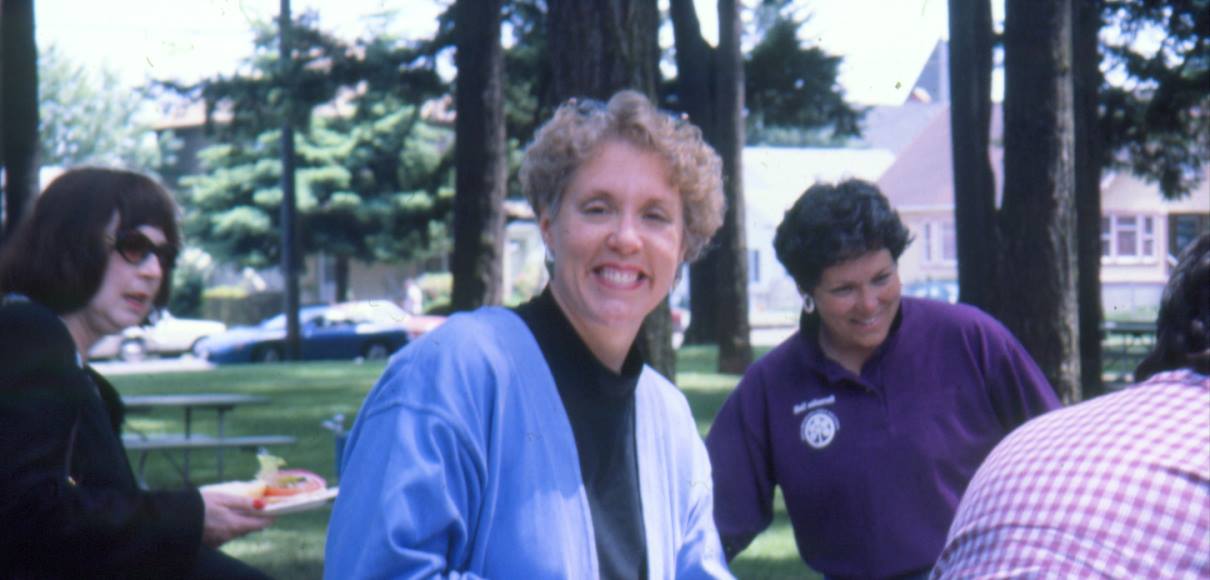
Lisa at PP&R picnic. Courtesy Portland Parks & Recreation

Lisa at PP&R picnic. Courtesy Portland Parks & Recreation

Our PP&R family has lost another friend and colleague, Lisa Turpel. Lisa was an institution with Portland Parks & Recreation during her 30 year career. Lisa came to the bureau in 1980 with a degree in therapeutic recreation and a passion to develop PP&R's ability to meet the needs of people with disabilities, and she retired in 2010 having overseen virtually every element of PP&R’s recreation services.

We take from her passing the strength and confidence to carry on this great work.

Her role with the bureau touched on everything from community education; services to people with disabilities (even before ADA); arts & cultural programming; senior recreation; sports; and aquatics. It was more than just a job – she lived an active life experiencing recreation as a supporter of the arts, a daily swimmer, a lifelong learner, and a fierce advocate for inclusion and access. Lisa transformed PP&R through policies and systems that promoted professionalism, equity, access, and most of all reflected the understanding that recreation can change lives and build community in profound ways.

Among her many accomplishments were the creation of an ADA review committee to guide project design for the 1994 bond which is still active today; establishment of gender-specific swims in response to the Muslim community’s request; personally championing and supporting the legendary Summer Concerts program we have today; among many, many, other examples.
Lisa’s work at PP&R will forever be woven into the fabric of the services that we provide the community. She leaves behind her husband Mark, daughter Claire and son-in-law Andrew, along with many other beloved family members and a wealth of deep friendships in PP&R.

The year Lisa retired we planted a Kentucky Coffee tree in Laurelhurst Park in her honor. We had a gathering with Lisa, her husband, a few friends and several of us “parkies”. Lisa was thrilled we honored her with the tree and could not believe we chose one of her favorite parks. We all agreed great tree, great park, great person. It just fit.

This sad news is just another reminder that the work we do each day is on the shoulders of great women and men who also worked hard to ensure that Portland's Park & Recreation system was the best it could be for all Portlanders. We take from her passing the strength and confidence to carry on this great work. Rest in peace, Lisa.

Parks are the Natural Classroom

Header photo courtesy Portland Parks & Recreation

Normal
0


false
false
false

EN-US
X-NONE
X-NONE


 <w:LatentStyles DefLockedState="false" DefUnhideWhenUsed="false"
DefSemiHidden="false" DefQFormat="false" DefPriority="99"
LatentStyleCount="3…

Wendy Thompson, MFA, is a freelance writer and education specialist.  As an integrated arts educator, she taught at the Vancouver School of Arts and Academics in Washington State and worked with Saturday Academy and The Right Brain Initiative. She specializes in STEM to STEAM curriculum design, creating fully integrated units like Fern Frenzy, River Voices, and Story of the Snag. Her award winning poetry has been published in a variety of local and regional anthologies and she has also published articles in Teaching Tolerance, Science & Children, and Chrysalis: Journal of Transformative Language Arts.

Environmental education in the outdoors is a stepping stone to a healthy and well-educated society. It allows people of all ages to explore their curiosity and consider their place in the world. Our connectedness and diversity rise into great relief surrounded by layers of ancient soil and biota. Children’s self-esteem improves when they direct their own learning and challenge themselves both cognitively and physically. A student in a North American Association for Environmental Education video said it best, “In the classroom you’re just sitting at your desk learning about it; out here you actually get to go out and do it.”
 
With the many benefits of outside environmental education, it is no wonder that Portland enjoys many outlets for environmental education from pre-k through adulthood.  Portland Parks & Recreation alone offers at least 17 different programs to Portlanders ages 3-22, helping over 16,000 children each year learn in our public parks. I interviewed a local educator and artist, Wendy Thompson of Wahkeena Arts and of Springwater Studio, about her experiences in environmental education in Portland. Wendy has taught using hands-on and placed-based experiential learning techniques in the Metro region for over 25 years.
 
Do you think urban parks are an important resource for educators?
 
Whether as expansive as Forest Park or as minuscule as Mill Ends Park, urban parks are a vital resource for educators. Many classroom teachers, particularly on the elementary end, are generalists who are required to teach in a variety of subjects with minimal time for planning. The parks and related services not only provide opportunities for hands-on, experiential learning, but an abundance of professional development resources, training, and even lesson plans for a myriad of subject area connections.

What do you think children get in a natural setting that they can't get in a classroom?  
 
Why limit a child's experience of a Douglas fir to a text book photograph and facts when she can go to a local park and discover how many of her friends it takes to hug the trunk. She can find the mouse tail in the pine cone and write a legend, compare and contrast the needles to neighboring pine in her science journal, or peer under the bark with her magnifying lens and discover an entire micro community. She can make suppositions about growth patterns and life cycles, adaptations, and interdependence all while breathing in the health benefits of time outdoors. Research demonstrates the value of experiential, contextual, inquiry-based, integrated learning. In a natural park setting, children get the added benefit of full-on 3-D, sensory stimulation so lacking in our electronic 2-D classrooms.

What is one of your favorite memories of combining education and public parks or nature areas?
 
Through Saturday Academy, I was able to take a group of César Chávez elementary students to their neighborhood Columbia Park to Geocache. Not only did they learn about GPS coordinates, longitude/latitude, following directions, and ethics of geocache, they also learned about respect for their park. How could they find the cache deep under an azalea bush without hurting one single limb or leaving one footprint hint for the next geocacher? Some of the hints for the caches introduced them to botanical names and the students were sprinting from tree to tree, crawling in the grass, grinning throughout their learning experience. These inner city kids, who may never have explored the park beyond the playground or pool, were excited to show their friends the secret mysteries of the park, both inanimate and living.

* * *
Let’s give thanks for the wonderful public parks and the teachers that help us unlock the secrets that unfold daily in nature.  The Portland Parks Foundation understands that environmental education is best conducted in nature, and we’re committed to supporting our 200+ natural classrooms across Portland.